Ace Deck Builders

December 2025

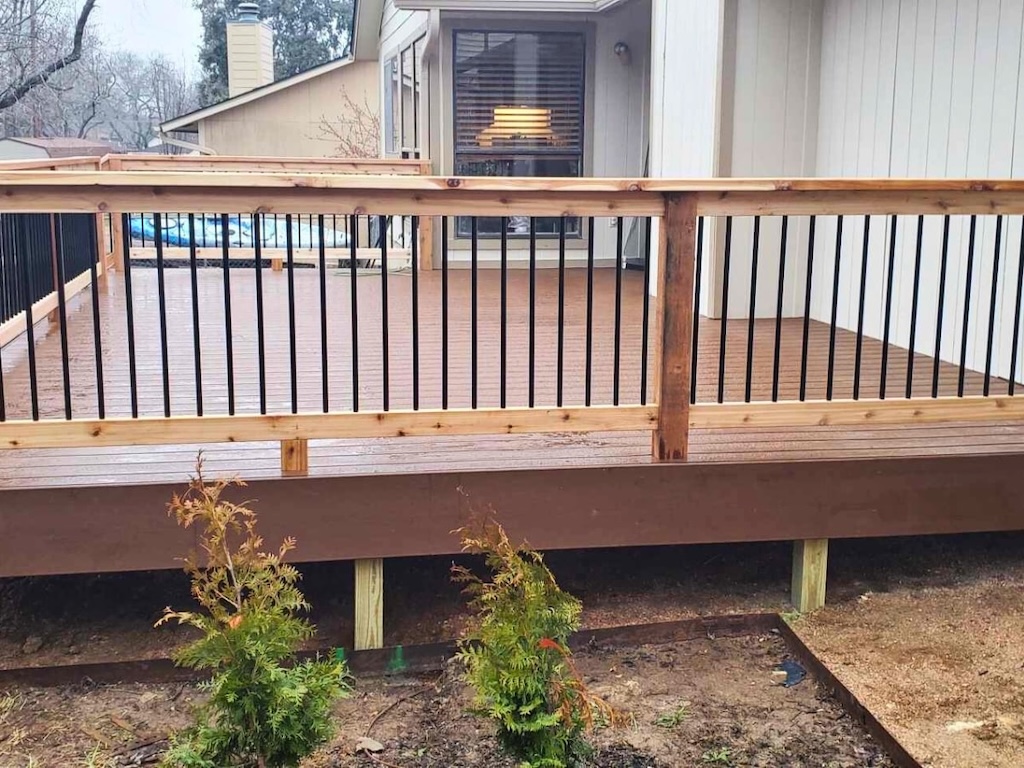
A newly built wooden deck with light brown planks and black metal railings surrounded by a small garden with young shrubs. A cozy house is visible behind.

When to Go Free-Standing: Avoiding Risky Ledgers on Difficult Walls

TL;DR Ledger attachments are excellent—when the wall can safely take them. In Austin, many problem walls (brick veneer, stone cladding, EIFS/stucco, foam sheathing, questionable framing, low door thresholds) make ledgers risky or code‑noncompliant. A free‑standing deck avoids water intrusion at the building envelope, reduces inspection friction, and often installs faster on remodels. The trade‑off is […]

When to Go Free-Standing: Avoiding Risky Ledgers on Difficult Walls Read More »
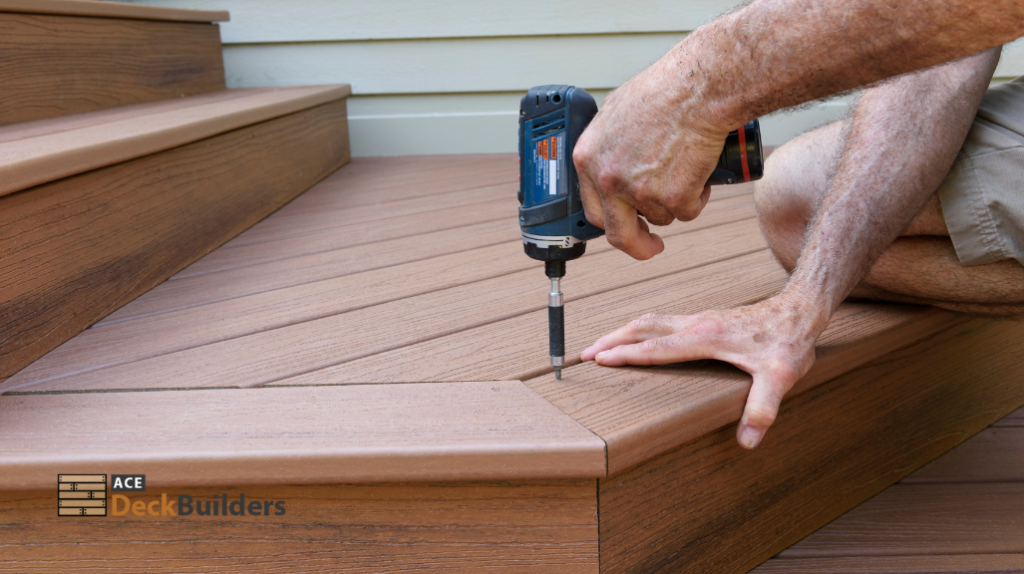
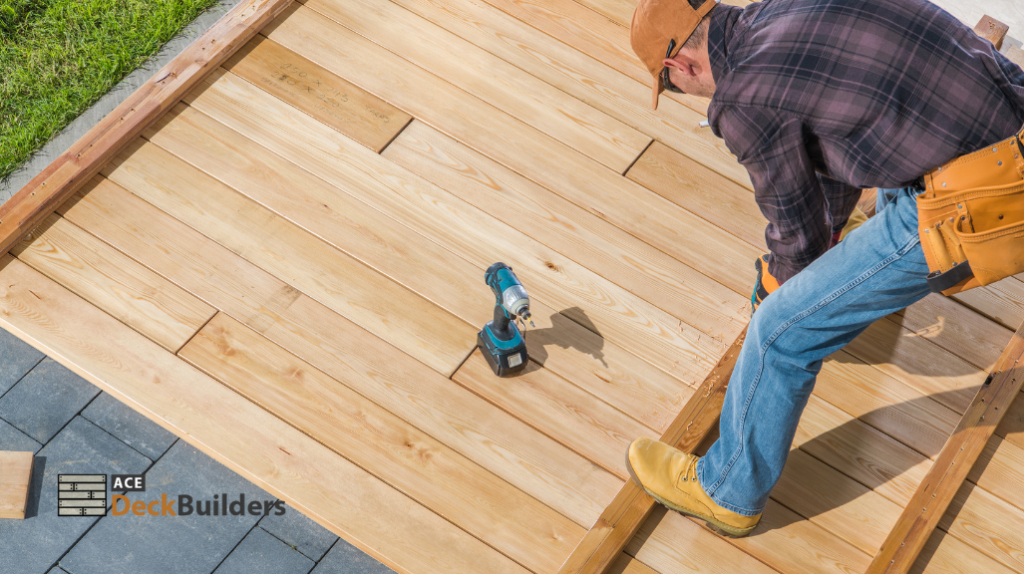
person drilling wood

Frame Sound but Tired Boards? Resurfacing Rules for Austin Homes

TL;DR If your deck frame is solid but the surface looks beat, resurfacing can deliver a like‑new look fast—if the structure, fasteners, and clearances check out. Austin‑proof resurfacing means verifying joist spacing and crown, replacing corroded hardware, correcting ledger/footing issues, and adding moisture defenses (joist tape, end‑grain sealers). Then choose cooler, light‑tone composite/PVC or porcelain

Frame Sound but Tired Boards? Resurfacing Rules for Austin Homes Read More »

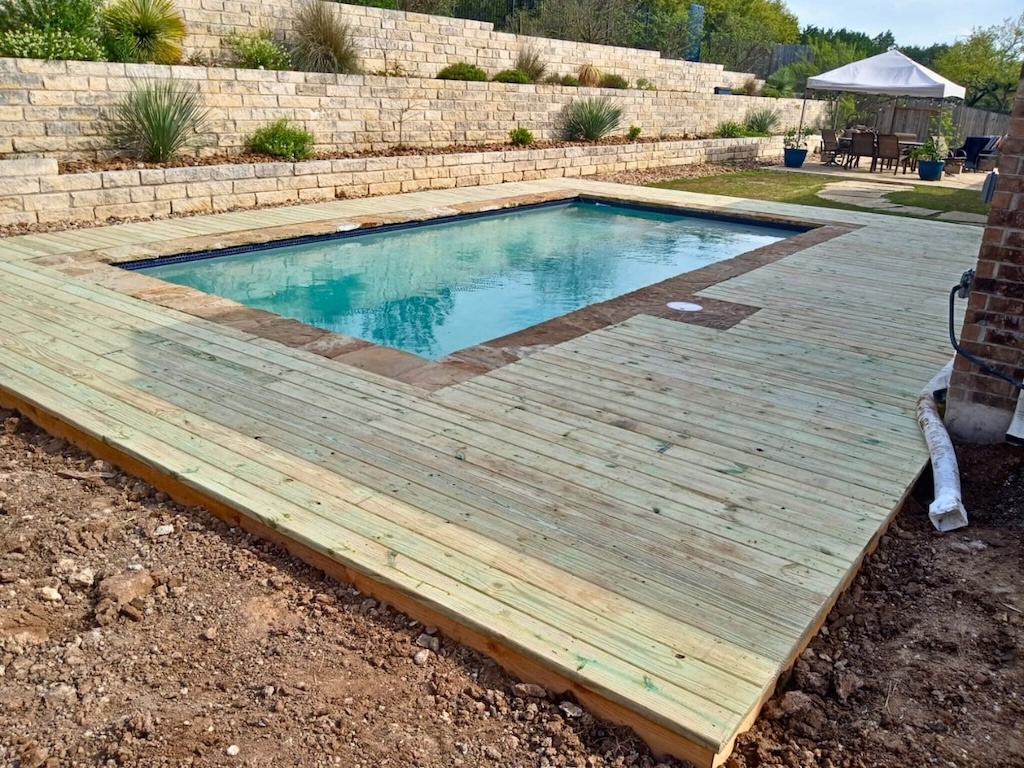
Backyard scene showing a rectangular pool with clear water, surrounded by a wooden deck. Terraced stone walls with plants add a natural vibe. A canopy and table set are in the background.

The Wobble Index: Simple Tests That Reveal Hidden Deck Issues

TL;DR If your deck feels loose, it probably is. Small, repeatable tests—done safely—can surface hidden problems long before they become repairs: post rock and uplift, beam deflection, joist bounce, ledger looseness, guard/handrail flex, and stair racking. Our Austin‑ready “Wobble Index” walks you through a 30–45 minute sequence that scores wobble, sway, and vibration so you

The Wobble Index: Simple Tests That Reveal Hidden Deck Issues Read More »

Timeline Reality for Austin Decks: Lead Times, Inspections, and Weather

TL;DR Deck timelines in Austin aren’t “2–3 weeks, easy.” Real schedules align with design decisions, permitting/HOA requirements, footing choice, material availability, inspection cadence, and weather windows. Expect a typical sequence of consult → design/engineering (3–14 days) → permitting (1–3+ weeks) → site prep/footings (2–7 days) → framing/rough (1–2 weeks) → rail/lighting/finishes (3–10 days) → final

Timeline Reality for Austin Decks: Lead Times, Inspections, and Weather Read More »

Rail & Lighting Allowances: The Line Items That Swing Your Deck Quote

TL;DR Rails and lighting can swing an Austin deck quote by thousands—often more than the decking itself. The price changes fast with rail type (cable vs metal vs composite), linear footage, post spacing, stair sections, and hardware metal (HDG vs 304/316 stainless). Lighting swings with fixture count, beam length/wattage, control method, and wire routes (and

Rail & Lighting Allowances: The Line Items That Swing Your Deck Quote Read More »

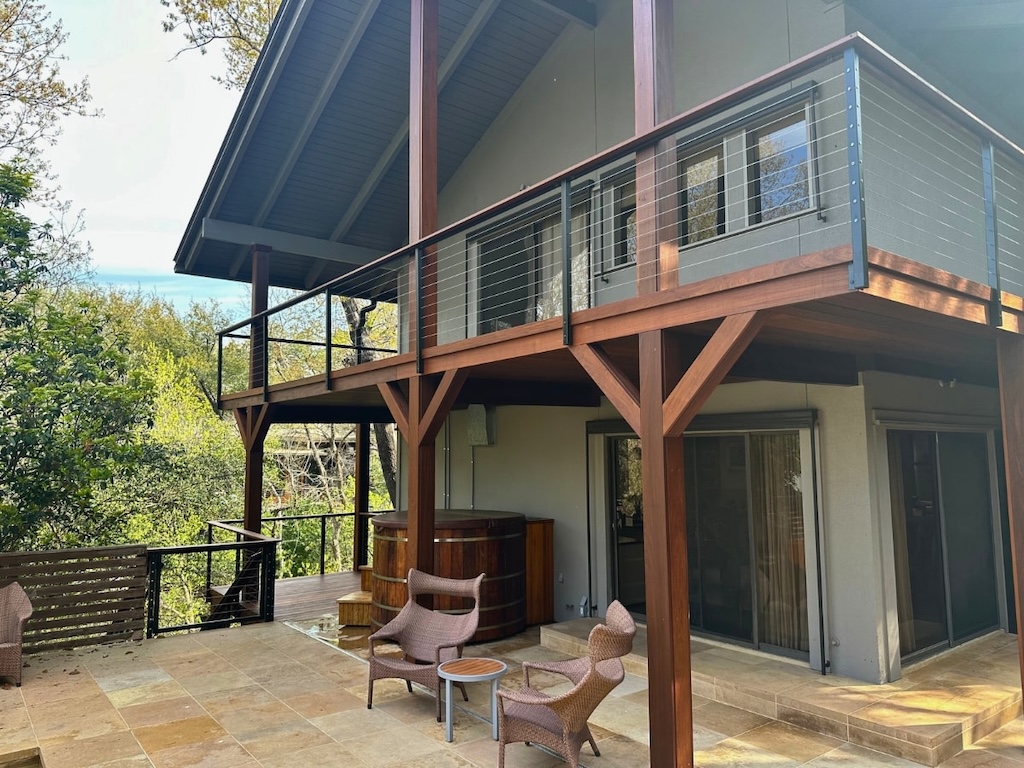
Two-story house with wooden beams and metal railing, featuring a large balcony. Stone patio below has wicker chairs and a hot tub, surrounded by green trees.

Scope Gaps to Watch For in Austin Deck Bids (And How to Close Them)

TL;DR Most “cheap” deck bids in Austin are missing work you’ll end up paying for later. The classic scope gaps hide in site prep and access, footing engineering, ledger and flashing details, rails and stairs, electrical and lighting, demolition and haul-off, and permits/inspections. Close them by demanding line-item scope with assumptions, drawings showing load paths

Scope Gaps to Watch For in Austin Deck Bids (And How to Close Them) Read More »

Annual Deck Tune-Up Plan: Small Tasks that Prevent Big Fixes

TL;DR A Central Texas deck lasts longer (and feels better to use) when you treat maintenance like a rhythm, not a rescue mission. The Austin-proof plan is simple: once per year, run a structured pass over safety hardware, drainage, end-grain, and finishes; then layer in quick monthly habits during the sunny season. Expect about 2–4

Annual Deck Tune-Up Plan: Small Tasks that Prevent Big Fixes Read More »

deck staining in Austin by Ace Deck Builders

Prep that Makes Stain Last: Austin-Proof Cleaning, Brightening, Sanding

TL;DR Great stain jobs fail in Austin when prep is rushed. Lock in longevity by working a clean → strip (if needed) → brighten → dry → sand → dust‑off → stain sequence. Target <15% moisture content before finishing, neutralize cleaners with a brightener, and sand only to open pores (60–80 grit on flats, 100+

Prep that Makes Stain Last: Austin-Proof Cleaning, Brightening, Sanding Read More »

deck staining in Austin by Ace Deck Builders

Clear, Semi-Transparent, or Solid? Picking a Stain That Lives in Austin

TL;DR Austin’s UV, heat, and storm bursts are brutal on deck finishes. Clear looks natural but protects the least and needs frequent re‑coats. Semi‑transparent balances grain visibility with UV blockers and is the best all‑around for most Austin decks. Solid hides flaws and blocks UV best, but it’s a film that can peel if prep

Clear, Semi-Transparent, or Solid? Picking a Stain That Lives in Austin Read More »

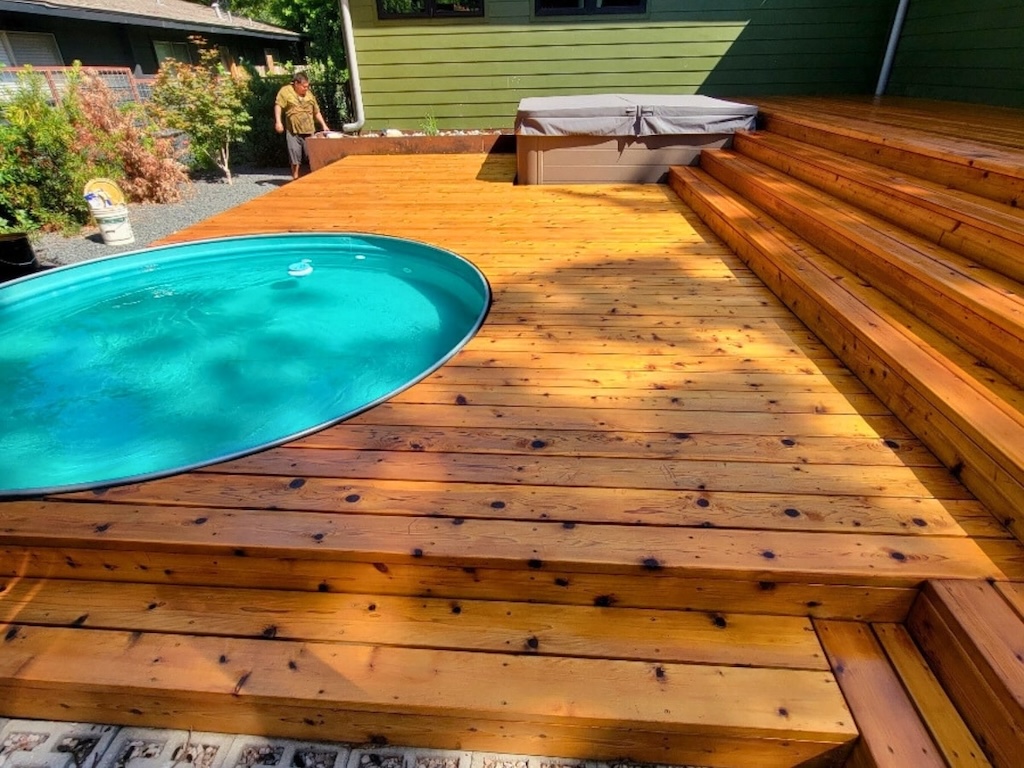
A sunlit wooden deck with an oval pool and multi-level steps. A man tends plants in the corner, creating a serene backyard atmosphere.

Fasteners & Flashings that Survive Austin’s Heat and Storms

TL;DR Austin decks fail early when the wrong metals are exposed to heat, UV, and sudden downpours. Choose corrosion‑resistant fasteners (hot‑dip galvanized or stainless—304 inland, 316 near pools/splash) matched to your lumber chemistry; use structural screws instead of lag bolts where possible; and detail high‑temp butyl flashings with real terminations (end dams, counter‑flashing, drip edges).

Fasteners & Flashings that Survive Austin’s Heat and Storms Read More »