Ace Deck Builders

Wood Decks Built for Austin Soil and Sun

Wood deck installation in Austin means building a deck from pressure-treated pine, cedar, or a mix of the two, on footings sized for the local soil. Wood costs less upfront than composite, stays cooler in the sun, and needs a fresh stain every two to three years.

Call Now

(512) 566-7519

Request Free Estimate
  • This field is for validation purposes and should be left unchanged.

Wood is still the right call for a lot of Austin homes. It’s the least expensive way to get a solid, good-looking deck, it can be repaired one board at a time, and a refinish every few years brings it back instead of wearing it out. The tradeoff is upkeep, and we’d rather you choose wood knowing exactly what that schedule looks like than find out in year three.

If upkeep is the deciding factor, compare our composite deck installation options first. If you’re weighing wood species, our cedar deck installation page goes deep on grades and profiles.

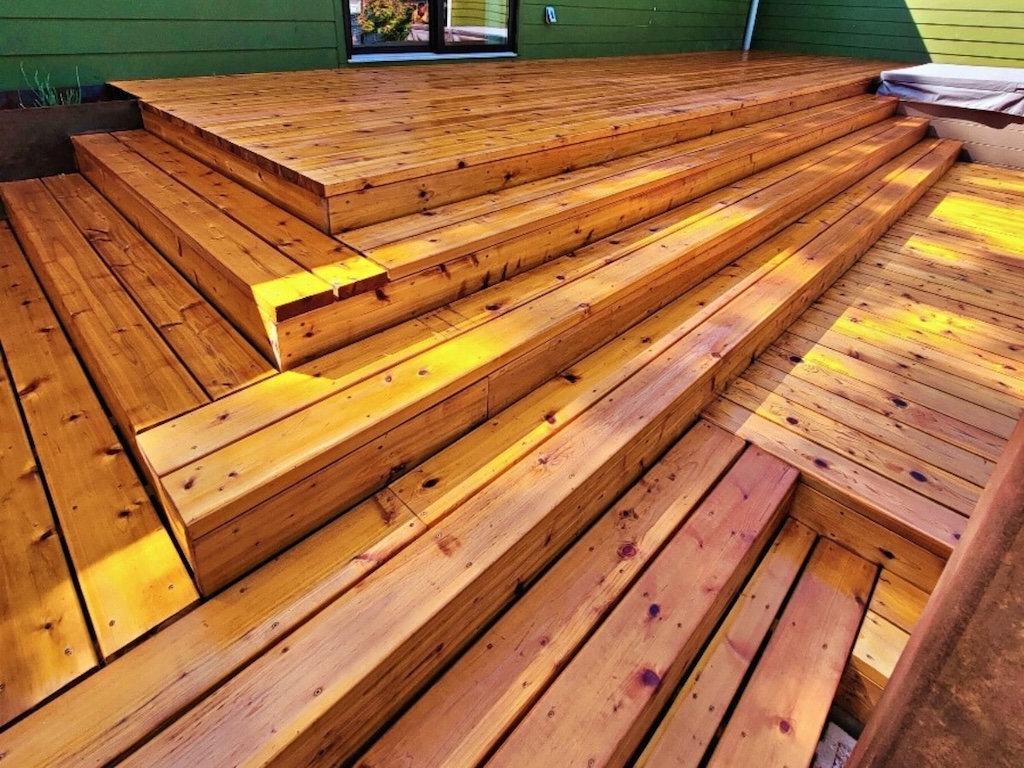
stained wooden outdoor deck with wide, tiered steps, basking in warm sunlight, creating a welcoming, natural ambiance against a green wall backdrop.

Wood wins on upfront cost, and on a large deck the gap with composite adds up fast. It also stays cooler underfoot in full sun, which matters on west-facing decks where composite heats up the most. And when a board fails, you replace that board; there’s no discontinued color to match years later.

It suits owners who don’t mind a refinish every few years, homes where real grain fits the architecture, and budgets that would rather put money into a stronger frame than a pricier surface. For the full sequence every build follows, from footings to walkthrough, see what’s included in a new deck installation.

Pressure-Treated Pine or Cedar?

Both are wood, and both work here, but they behave differently. Most of our wood decks use both: pressure-treated lumber for the hidden frame and cedar for the surface you walk on.

  • Pressure-treated pine is chemically treated against rot and insects and costs the least. It’s heavy, and if it goes in wet it can twist and check as it dries. It’s our standard for posts, beams, and joists, and it works as a walking surface when budget is the priority.
  • Cedar resists decay and insects naturally, weighs less, takes stain beautifully, and weathers to a silver gray if you leave it bare. It costs more than pine, but it’s the surface most Austin owners choose when they want wood.

A pine surface can make sense on a budget build or a deck that gets repainted with a solid stain anyway. Cedar makes more sense where the deck is on display and you’d like the grain to show.

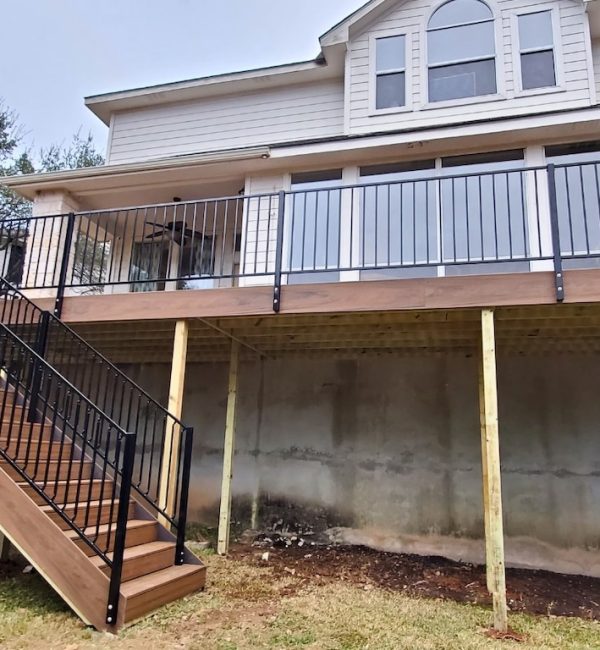
Two-story house with large upper deck featuring black railings and wooden stairs. Overcast sky, trees in background, conveying a calm suburban setting.

Why Lumber Quality Matters

A wood deck is only as straight as the boards that go into it. Pressure-treated lumber often arrives wet from treatment, and boards that dry after installation can cup, twist, and pull their fasteners. We pick straight stock, set aside boards with heavy crown or splits, and plan the stain for after the wood has dried rather than sealing moisture in. It’s slow, unglamorous work, and it’s the difference between a deck that stays flat and one that starts moving in its first summer. Cedar gets the same scrutiny: we check grade and moisture on delivery and send back boards that won’t lie flat.

What's Under the Surface

Footings. Concrete footings sized for the ground they sit in. On the expansive clay across central and east Austin, depth is what stops seasonal movement. On the limestone lots to the west, posts are often anchored straight to rock.

Ledger. Where the deck meets your house, we use structural fasteners in the right pattern and flash the connection so water can’t get behind the siding. It’s the most failure-prone joint on most decks, so it gets the most attention.

Framing. Joist spans follow code and the lumber’s rating. Blocking cuts bounce, and joist tape on exposed tops slows rot where water sits.

Hardware. Hot-dip galvanized or stainless connectors rated for contact with treated lumber, which corrodes cheaper hardware.

Drainage. Slope and board gaps move water off the deck, and downspouts get routed away from the footings.

Sloped lots are their own case. When a yard drops several feet from the back door, stepping the deck down the hill usually costs less and stands stiffer than one tall platform; that’s our multi-level deck installation approach applied to wood.

Mistakes We Build Around

A lot of what we know about building wood decks comes from fixing other people’s. The same shortcuts show up again and again on Austin decks that failed early: ledgers hung with nails and no flashing, shallow footings on clay, joists left bare to soak up every rain, and stain rolled onto wet pressure-treated lumber the week it went in.

Each of those saves an hour or two during the build and costs a repair within a few years. We skip all of them. If your current deck has one of these problems, the deck repair services we offer in Austin may fix it without a rebuild.

Railings and Stairs

Wood railings match the deck and cost the least. Metal and cable systems keep the view open and need less care, and many owners mix them, like wood posts and caps with metal balusters. Whatever the style, guards get posts that carry load into the frame and spacing that meets current code, and stairs get consistent risers from top to bottom. You can compare systems on our deck railing installation page.

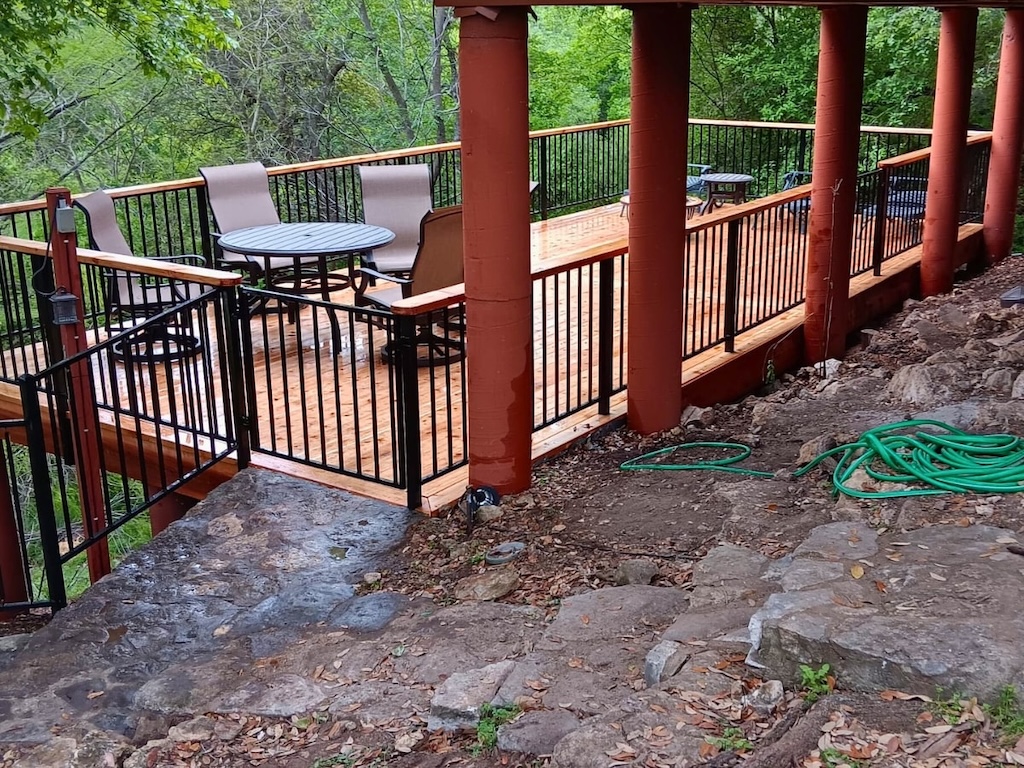
Wooden deck with metal railings, table, and chairs overlooking lush green trees. Earthy tones and hoses on rocky ground suggest a serene, rustic setting.

How a Wood Deck Build Runs

1

Site visit. We measure, photograph, and check trees, easements, drainage, and utilities, then talk through layout, use, and budget.

2

Written scope. A dimensioned plan with two or three priced options, fixed inclusions, allowances where needed, and a build calendar.

3

Permits and HOA. Our trusted third-party permit partners prepare drawings, submit applications, and coordinate inspections. We prepare HOA packets where needed.

4

Build. Footings, framing, decking, rails, and any lighting, built to code with daily cleanup.

5

Walkthrough. We walk the deck with you and hand over the stain schedule and your one-year workmanship warranty.

Staining and Upkeep From Day One

Wood needs protection from UV and water, and in Austin that means a fresh coat on the walking surface every two to three years. We plan the first finish once the wood is dry enough to take it, seal cut ends where boards drink water fastest, and give you a stain calendar matched to your deck’s sun exposure. When it’s time to recoat, our deck staining and restoration work covers the prep that makes a stain last.

Owners who’d rather not keep the calendar themselves can put the deck on a scheduled deck maintenance plan, which adds yearly fastener and frame checks to the finish schedule.

Why Homeowners Choose Us for Wood Decks

We’ve been building and repairing wood decks across Central Texas for more than 12 years, with over 200 completed projects on clay and limestone lots alike.

We’re fully insured with general liability and workers’ compensation on every project, and we’ll send proof before work starts. Texas doesn’t license deck contractors, so insurance and a written warranty are the credentials that actually exist. Every build carries a one-year workmanship warranty on our labor and installation.

Cost, Timeline, and Getting Started

Price depends on size, height, lumber species and grade, railings, stairs, and the site itself, including slope and access. Each shows up as its own line in the written scope. Design and permit approval usually take a few weeks; once permits clear, most wood decks take one to two weeks on site, weather permitting.

We build wood decks across Austin, Round Rock, Cedar Park, Leander, Georgetown, Pflugerville, Liberty Hill, Lakeway, Bee Cave, West Lake Hills, and Buda; see the full Central Texas service area. To start, request a deck estimate online or call (512) 566-7519.

Call Now

(512) 566-7519

Frequently Asked Questions

A well-built wood deck commonly lasts 20 years or more here with regular upkeep. The frame usually decides it, not the boards. Good footings, a flashed ledger, and joist tape protect the parts you can’t see, and a stain every two to three years protects the surface. Decks that skip the upkeep often need major repairs around year ten.

For the frame, pressure-treated pine is the standard, and we use it on nearly every wood deck. For the walking surface, cedar costs more but resists decay naturally, weighs less, and shows its grain under stain. Pine works as a surface when budget comes first or you plan a solid stain. We’ll price both in the written scope so you can compare.

Every two to three years for the walking surface of a sunny Austin deck. Rails and vertical surfaces usually last longer because water runs off them. Shaded decks stretch the cycle but need more mildew cleaning. The easy test is water: when it soaks in instead of beading up, the finish is due. We give you a stain calendar at handoff.

Yes, if it’s left unfinished. UV breaks down the surface fibers, and cedar and pine both weather to a silver gray within a year or two in Austin sun. Some owners like that look, and it doesn’t mean the wood is rotting. But bare wood checks and absorbs water faster, so we recommend a UV-protective stain even if you like a lighter, natural tone.

Usually not right away. Pressure-treated lumber often arrives wet from treatment and needs several weeks to dry before stain will soak in properly. Cedar and kiln-dried lumber are usually ready sooner. We take a moisture reading instead of guessing, and we schedule the first finish when the wood is ready. Staining too early traps moisture and leads to peeling.

Pressure-treated lumber is treated to resist termites and rot, which is one reason it’s the standard for posts, beams, and joists. Cedar has natural oils that deter insects. We also keep wood off direct soil contact where possible, route water away from the posts, and leave airflow under low decks, since damp wood is what draws pests in the first place.

With footing depth. Expansive clay swells when it rains and shrinks in drought, and footings that sit too shallow ride that movement until posts tilt and the frame racks. We size and set footings for the soil on your lot, which on clay usually means going deeper. On limestone lots, we often anchor posts directly to the rock instead.

Often, yes. We check the existing frame first, because an addition is only as sound as what it ties into. If the original deck is healthy, we can extend it and match the materials as closely as possible, though new wood will look different until both are stained together. If the old frame has problems, we’ll tell you before building onto it. Contact our office to set up a visit.