Ace Deck Builders

Deck Repair, Inspection, and Building in Lakeway

Deck repair and inspection lead our work in Lakeway, TX, alongside restoration, replacement, and new builds. Lake Travis conditions are hard on decks, and every Ace project starts with a written, photo-documented assessment of what the structure actually needs.

Lakeway homeowners call us about repairs more than anything else, and the local conditions explain why. Lake-effect humidity, steep grades, shallow soil over limestone, and hard western sun each work on a deck in their own way. Our job starts with reading which of them is working on yours, and it starts in writing: how our deck inspection process works covers exactly what we check and what the report gives you.

Call Now

(512) 566-7519

Request Free Estimate
  • This field is for validation purposes and should be left unchanged.

Proximity to Lake Travis raises ambient humidity, and the first thing it attacks is the fasteners. Corroded screws and hangers loosen connections years before the boards themselves look tired, which is why a Lakeway deck can feel spongy while still looking presentable. Western exposures add hard afternoon sun off the water, drying and checking surface boards on the lake side of the house faster than the shaded side.

Then there’s the ground. Lakeway lots run steep, with shallow soil over limestone, so decks here are often elevated or stepped, and footing problems show up as movement at the posts. Mature oak and elm canopy rounds out the list: storm-dropped limbs are one of the most common repair calls we get after severe weather moves through the Lake Travis corridor.

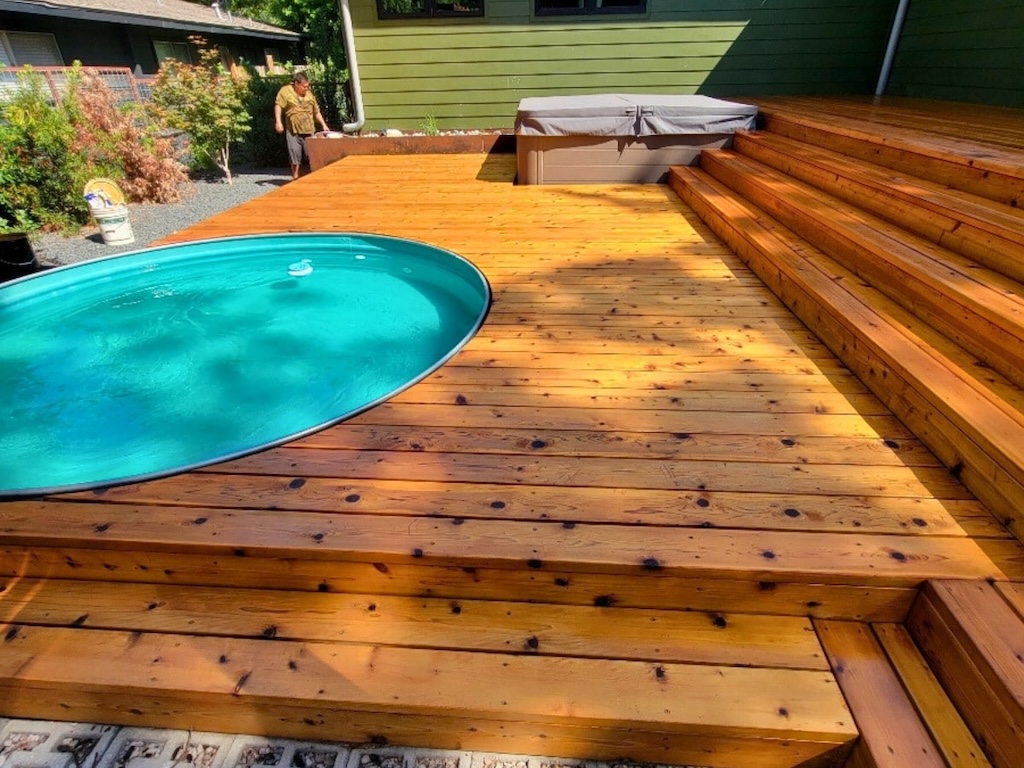
A sunlit wooden deck with an oval pool and multi-level steps. A man tends plants in the corner, creating a serene backyard atmosphere.
Additional-Costs-to-Consider

Deck Repair in Lakeway

Repair is the heart of our Lakeway work. The common scopes: fastener and hanger replacement where lake humidity has done its work, railing re-attachment and post repair on elevated sections, board replacement after storm damage, and ledger re-flashing where water has been getting behind the connection. Every repair starts from the inspection findings, so you can see the evidence behind the scope; take a closer look at the deck repair services we offer in Austin and the Lake Travis corridor for how the scopes are built.

The written report also carries weight beyond the repair itself. Lakeway HOAs typically want documentation before approving exterior work, and insurance claims after storm damage move faster with photo-documented findings. The report is yours to keep either way.

Restoration, Replacement, and New Builds

When the frame is sound but the surface has weathered, the lighter path is our deck staining and restoration work, which buys years on a structurally healthy deck at a fraction of replacement cost. When the assessment says the structure is past repair, we replace, and we’ll show you the math behind that call rather than just the invoice.

New builds on Lakeway’s grades usually mean stepped construction. Our multi-level deck installation approach frames each platform for its own spot on the slope, with footings anchored to limestone where the soil runs out, and railing connections specified for wind exposure off the lake.

Same-Week Availability, Fully Insured

Lakeway sits inside our same-week inspection coverage, with storm-related assessments getting priority routing during severe weather season, when timing matters for insurance documentation. We’re fully insured and provide certificates of insurance to HOAs on request. Texas doesn’t license deck contractors, so insurance and our one-year workmanship warranty are the credentials that actually exist. Permits run through trusted third-party partners who work Lakeway’s process regularly, along with Bee Cave and the surrounding municipalities.

If your deck is showing any of the patterns on this page, schedule an inspection and get the written report. If you already know your scope, request a deck estimate online or call (512) 566-7519. Lakeway is part of our full Central Texas service area.

Call Now

(512) 566-7519

Frequently Asked Questions

Yes, and it’s the largest share of our Lakeway work. The common repairs follow the local conditions: corroded fasteners and hangers from lake humidity, loosened railing connections on elevated sections, storm-limb damage to boards and framing, and ledger flashing failures. Every repair scope is built from a written, photo-documented inspection, so you see the evidence behind the recommendation before you approve anything.

The conditions. Lake-effect humidity corrodes fasteners years ahead of the metro average, steep lots put decks on posts and slopes, shallow soil over limestone changes the footing approach, and wind exposure off Lake Travis stresses railing connections. We build and repair to those conditions specifically, and the site assessment documents which ones apply to your property before anything is priced.

The frame decides. If the ledger, joists, and posts are sound and roughly 20 percent or less of the components need attention, repair usually wins. If humidity and time have gotten into the framing, or repairs would pass half the cost of a new deck, replacement makes more sense. The inspection report shows which side of the line your deck is on, with photos behind every finding.

Yes. Our findings reports list each issue with location, severity, and photos, plus the proposed materials and scope in language architectural committees can review without translation. Most Lakeway and Bee Cave associations accept the report as submitted, and where an HOA uses its own form, we transfer the findings into it. The same documentation supports insurance claims after storm damage.

Most structural work does, and Lakeway runs its own permit process separate from Austin’s, as do Bee Cave and The Hills. Our trusted third-party permit partners handle the submissions across all of them and know which projects trigger which reviews. HOA approval typically comes first, then the permit; the timeline for both gets built into the project schedule at the spec stage.

Lakeway is inside our same-week inspection coverage year-round. During severe weather season, storm-related inspections get priority routing, because insurance documentation works best when the findings are recorded close to the event, and because water intrusion caught early is a repair rather than a rebuild. The written report follows the site visit within 48 hours.

Yes. Steep lots usually call for stepped, multi-level construction, with each platform framed and footed for its own spot on the slope. Footings often anchor to limestone rather than sitting in poured piers, and railing connections get specified for lake wind exposure. Under about two feet of total drop, a single level on graded footings can still work; the site assessment measures what your lot actually needs.

It depends on the structure’s size and access, so we confirm the price when you book rather than publishing a flat rate. What’s fixed is what you get: a 60-to-90-minute on-site assessment covering the frame, connections, fasteners, railings, and surface, and a written, photo-documented report within 48 hours. The report is yours to keep whether or not you hire us for the work that follows.