Ace Deck Builders

Rooftop Deck Installation in Austin, TX

Ace Deck Builders installs rooftop, balcony and terrace decks across Austin. After the appropriate professional reviews the structure and waterproofing, we build on pedestal or sleeper systems that keep decking off the roof membrane and let water drain underneath.

Call Now

(512) 566-7519

Request Free Estimate

  • This field is for validation purposes and should be left unchanged.

Rooftop deck installation in Austin turns unused roof space into room to sit, eat and take in the view, without adding to your home’s footprint. Roofs are demanding places to build, though. A rooftop deck has to protect the membrane, keep drains clear, stand up to wind and sun, and give you a safe way up and down. Request a rooftop deck estimate and we’ll start with the roof you have.

Ace Deck Builders is veteran-owned, and every finished rooftop deck carries our 1-year workmanship warranty.

Outdoor staircase with black metal railings leading to a rooftop deck on a stone house. The setting is sunny with trees and an umbrella in the background.

In Downtown condos and townhomes, and on homes where the yard is small or steep, the roof is often the best outdoor space you have. A rooftop deck adds usable living area with skyline or Hill Country views. It also faces more sun, wind and rain than any deck on the ground, so planning starts with the roof, not the decking.

Why Trust Ace Deck Builders

We’re fully insured with general liability and workers’ compensation coverage, which matters for work at height, and proof of insurance is available on request. Every project carries a 1-year workmanship warranty on our labor and installation. You’ll get a written scope with options before work starts, and our crew documents the roof’s condition with photos before anything goes on it.

What Makes Our Rooftop Builds Different

Structure and Waterproofing Come First

Before design starts, the appropriate professional reviews the roof structure and waterproofing, and we plan around what that review allows for weight and drainage. A new deck over a failing membrane only hides the problem, so leaks or soft spots get addressed before any decking goes on.

Membrane-Safe Installation

We don’t fasten through the roof membrane unless the membrane manufacturer’s approved details allow it. Most decks float on pedestals or sleepers over a protection layer, and we coordinate with your roofer when needed, which is how roof warranties are protected.

Safe Access

Getting up and down matters every day. We plan stairs, ship ladders or spiral stairs that meet code and fit the space, with lighting so they’re easy to use after dark.

System Options

Pedestal systems set the decking on adjustable supports that sit on the roof surface. They level the deck on a sloped roof, keep drainage paths open underneath and leave access for future roof inspections or repairs. Sleeper systems float a framed assembly over a protection board where pedestals aren’t practical. Either way, we preserve the roof’s slope, keep scuppers and drains clear and leave expansion gaps so borders stay tight through Austin’s temperature swings.

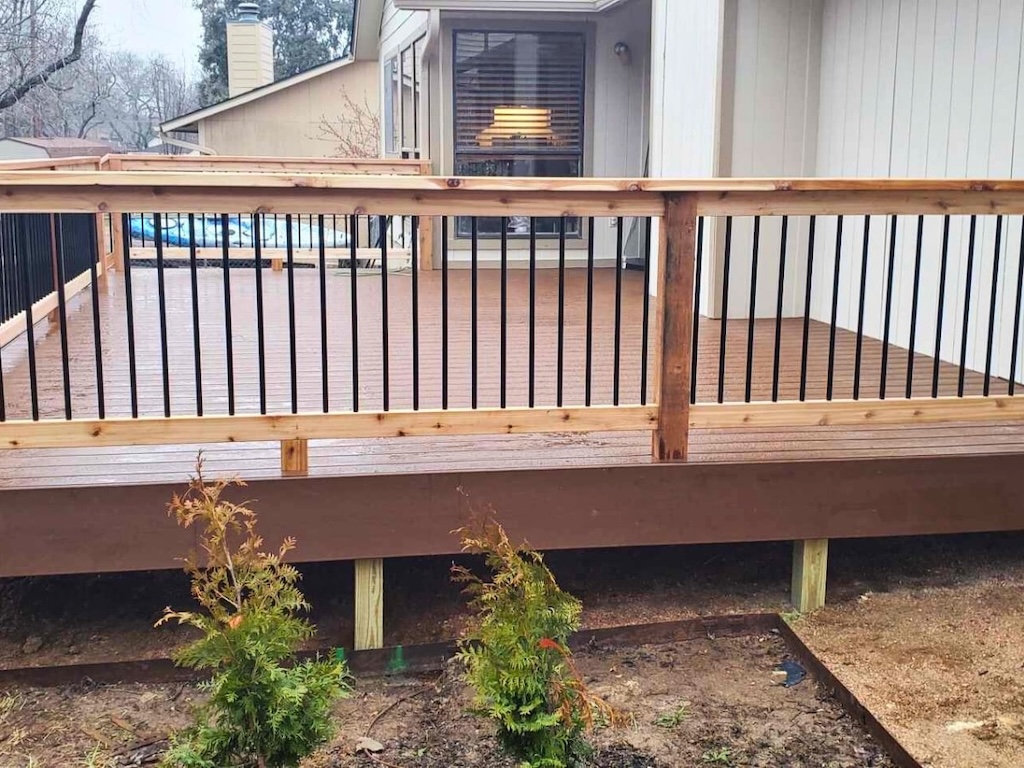
A newly built wooden deck with light brown planks and black metal railings surrounded by a small garden with young shrubs. A cozy house is visible behind.

Composite vs Wood for Rooftop Decks

For most rooftop decks in full sun, we recommend composite. Capped composite deck options from Trex and TimberTech, with Fiberon on request, resist fading and moisture and skip the staining that’s hard to do at height. Lightweight composite materials designed for elevated applications also help keep the load down, and lighter colors stay cooler underfoot.

Cedar can work on a rooftop with real shade, from a pergola or a neighboring building, if you’re committed to regular upkeep, and our deck staining service can keep that schedule. For railings, aluminum or cable keeps views open and handles wind better than solid panels, and our deck railing options cover both.

Our Rooftop Deck Installation Process

We start by evaluating access, roof type and age, slope, drains and scuppers, parapet heights and the structural review. Then you’ll see the layout in 3D renderings, with seating, planters, shade and lighting placed. Once the plan is approved and permits are in place, our crew stages materials, installs the support system, decking, railings and stairs, and finishes with a walkthrough and care notes for the membrane and the deck.

Comfort is planned in, too. A rooftop pergola or shade sail makes the deck usable on summer afternoons, planters can double as wind breaks, and screens are designed so they don’t act like sails in a storm. Building rules for access and staging often shape the schedule, so we settle them early and give you a realistic timeline once the plan is final.

Permits, HOA & Codes

Most rooftop decks need a building permit covering the structure, guards and any electrical work, and the City of Austin’s residential building permit process applies inside city limits. We handle permits through trusted third-party partners. If your building or neighborhood has an association, we prepare drawings and material details for its review, and we don’t order materials until approvals are in.

Already Have a Rooftop Deck?

Our deck inspection checks the surface, supports, railings and drainage, and targeted rooftop deck repairs handle loose boards, shifted panels and railing problems above the waterproofing.

When the decking or its supports have failed, deck replacement starts with the same review of the structure and waterproofing as a new build.

Rooftop Deck Installation Service Areas

We install rooftop, balcony and terrace decks across Austin. In Downtown Austin, most projects are condos and townhomes where building rules shape access and staging. We also build on homes in Central Austin neighborhoods like Travis Heights, Mueller and Tarrytown, and in West Lake Hills. See more of our Austin deck work.

Call Now

(512) 566-7519

Frequently Asked Questions

Rooftop projects need more planning than ground-level decks, because the structural review, design and permits come first. Once the plan is approved and permits are issued, on-site work depends on access, size, weather and inspections. We’ll give you a realistic schedule before work starts and keep you updated, including any building rules that affect staging and work hours.

Only where the membrane manufacturer’s approved details allow it. Most rooftop decks float on pedestal or sleeper systems over a protection layer, so the decking never fastens through the roof. That keeps the waterproofing intact, preserves drainage paths and leaves access for future roof inspections or repairs. When it’s needed, we coordinate details with your roofer.

It shouldn’t, as long as the installation follows the membrane manufacturer’s requirements. We document the roof’s condition before work starts, use approved details only and coordinate with your roofer when the warranty terms call for it. If your roof is near the end of its life, it’s usually better to replace it before the deck goes on.

Many flat and low-slope roofs can, but not every one. The appropriate professional reviews the structure and waterproofing first, and we plan the deck around what that review allows for weight and drainage. We also look at access, parapet heights and membrane condition during the site visit, so you’ll know early whether a rooftop deck makes sense.

Composite is usually the better fit. It resists fading and moisture, needs no staining at height, and lightweight composite materials designed for elevated applications help keep the load down. Cedar can work on a rooftop with real shade if you’re committed to regular upkeep. We’ll compare both with you, including how each one handles full afternoon sun.

We keep the roof’s slope intact and never block drains or scuppers. Pedestal systems leave open drainage paths beneath the decking, and gaps between boards let water drop through. We also plan access panels so drains can be checked and cleared, since leaves and debris under elevated decking are a common cause of standing water on the membrane.

In most cases, yes. Rooftop decks usually need a building permit covering the structure, guards and any electrical work, and buildings or neighborhoods with an association may have their own review. We handle permits through trusted third-party partners and prepare drawings and material details for any association review before materials are ordered.

Rooftop decks take the full force of wind and rain, so railing posts connect to structural points rather than the roofing, and privacy screens and shade elements are designed so they don’t act like sails. Aluminum and cable railings handle wind better than solid panels. After a big storm, a quick check of drains and connections is worth the few minutes.