
TL;DR
Austin sun punishes dark, glossy decking. In side‑by‑side heat tests, lighter hues and matte/textured caps stayed more comfortable, and assemblies with airflow underneath cooled faster. PVC and certain light‑tone capped composites typically ran cooler than dense, dark boards; porcelain pavers on pedestals were among the coolest. If you love rich colors, add shade and choose low‑sheen textures. For most family backyards, a light or mid‑tone, textured surface with shading over seating delivers the best barefoot comfort.
Why heat behavior matters for Austin decks
Central Texas sees long sunny stretches and brutal late‑day west exposure. Dark, smooth boards can exceed comfortable barefoot temps, while light, textured surfaces remain usable longer. If you’re not sure how your yard’s orientation will behave, our Austin deck team can walk the site and translate sun paths into real‑world material choices.
How we tested: surfaces, colors, textures, and setup
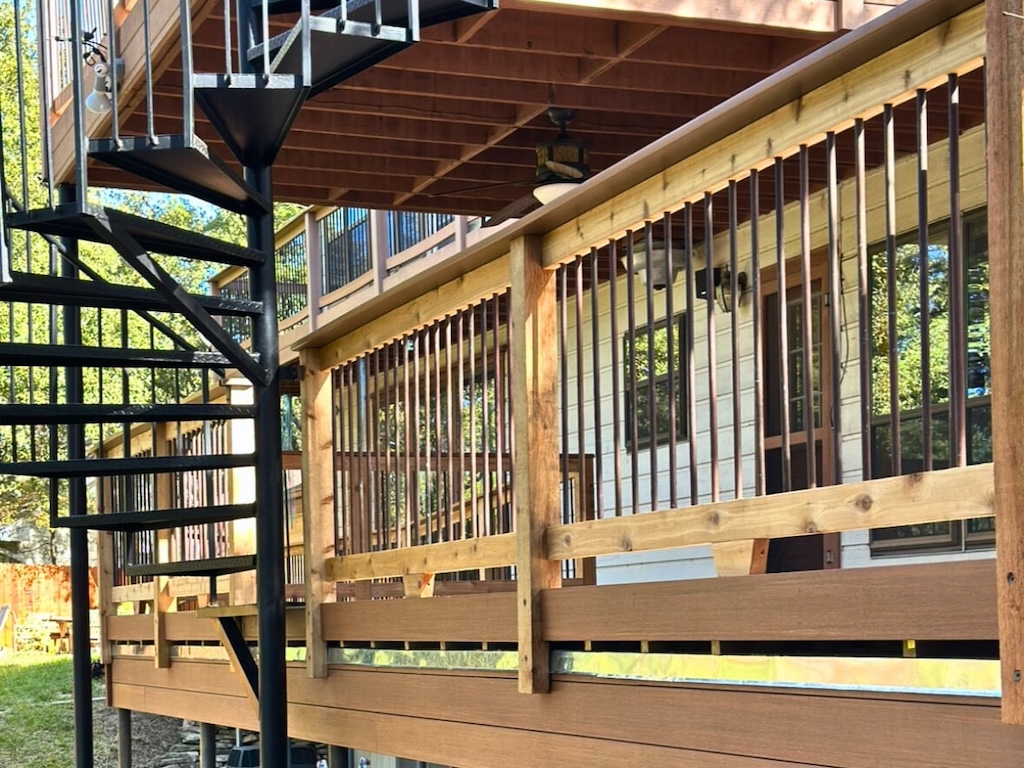
We arranged common deck surfaces in grouped swatches and recorded surface temperatures across sunny afternoons and shaded recovery periods.
Surfaces evaluated
- Capped PVC and capped composite boards (light, mid, and dark)
- Porcelain pavers on adjustable pedestals
- Tropical hardwood with ribbed vs smooth faces
- Textured rubber/resin tiles (select zone use)
Setup essentials
- Samples placed with consistent orientation; thermometer readings at fixed intervals
- Shaded cool‑down cycles to measure recovery time
- Air gap under boards vs direct contact to compare assemblies
What we’re looking for: Maximum temp under full sun, time‑to‑comfy cool‑down once shade hits, and traction feel when wet.
Winners and strugglers: what stayed coolest
- Consistently coolest: Light‑tone porcelain pavers on pedestals thanks to reflectivity and airflow below. Light-capped PVC boards also performed well, especially hollow‑chamber profiles that cool quickly.
- Middle of the pack: Mid‑tone capped composites with matte caps; ribbed tropical hardwoods when shaded part of the day.
- Hottest: Dark, high‑sheen boards (any material). Dense hardwoods in deep browns ran hot without shade.
If you’re leaning toward a manufactured option, our composite deck installation team can match brands and colorways to your exposure and barefoot comfort goals. Prefer a natural look? See options for species and textures through our wood deck installation services.
Color strategy: light, mid, and dark tones
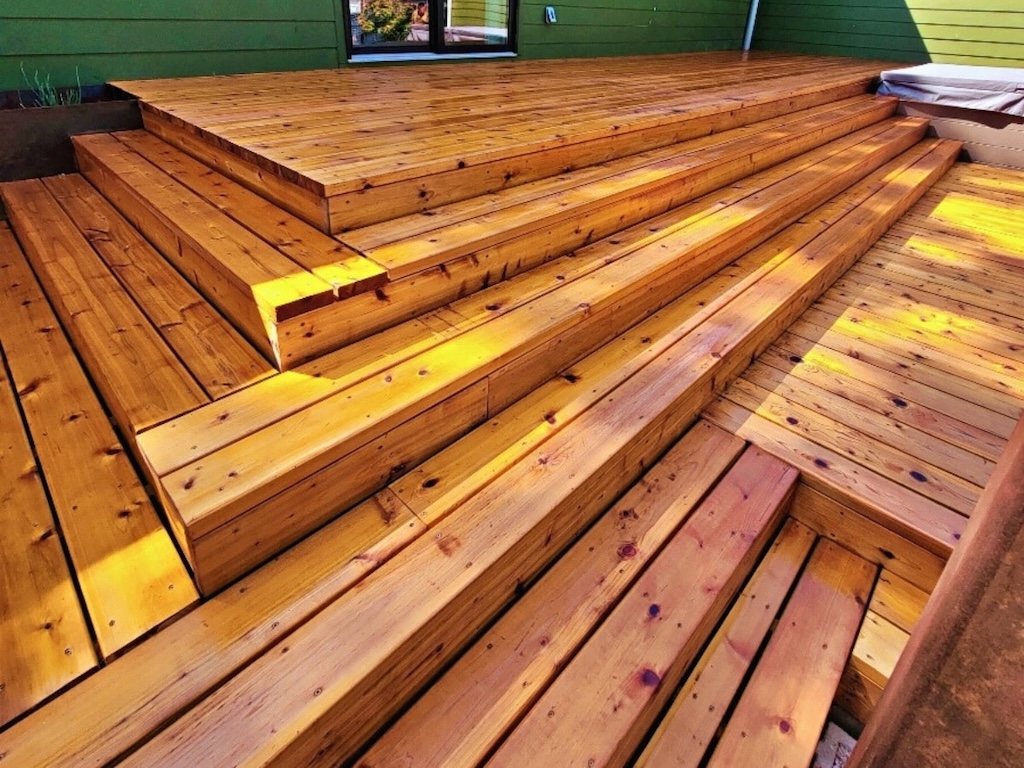
- Light tones: Creams, light grays, and sandy hues reflect more sunlight; pair with subtle variegation to hide dust and pollen.
- Mid tones: Versatile and forgiving on footprints; manage heat with texture and strategic shading.
- Dark tones: Moody and dramatic—reserve for shaded areas, under pergolas, or as border/inlay accents rather than full field boards.
For a broader context on sun, humidity, and storm cycles, here’s how Austin weather affects decks across materials and seasons.
Texture & sheen: why matte grips and runs cooler
- Lower sheen = lower glare. Matte and wire‑brushed caps reduce radiant feel and improve wet‑foot traction.
- Emboss patterns: Micro‑ridges and open grain break surface water films, making them feel cooler underfoot.
- Avoid gloss: Glossy caps show heat shimmer and feel slicker when wet.
Assembly matters: airflow, pedestals, and shading
- Vent the underside. Keep clear air paths under framed decks; avoid boxed‑in skirting without vents.
- Pedestal assemblies: Pavers or tiles on pedestals run cooler and dry faster; great for roof terraces and pool surrounds.
- Joist tape & spacing: Protect framing and keep gaps consistent; diagonals often want 12″ OC to maintain stiffness without trapping heat.
- Shade the users. Pergolas, sails, offset umbrellas, or deciduous plantings over seating change perceived comfort more than a few degrees of board temp.
Poolside specifics and burn‑risk reduction
- Favor light pavers at tanning ledges and splash zones.
- Choose wet‑rated textures (e.g., ANSI A326.3 for pavers/tiles) and high‑traction composite caps near water.
- Plan barefoot paths between the water and shade with the coolest surfaces in the layout.
Design tips to keep temps down without sacrificing style
- Use light fields with darker borders for contrast without overheating.
- Place lounges in engineered shade and grills on the breezier, less reflective side.
- Add low‑glare lighting for evening comfort so the deck is usable when it’s coolest outside.
Timelines, costs, and trade‑offs for “cool deck” choices
- Design & selection: 3–7 days to finalize materials and shade elements.
- Build: 2–4 weeks for typical backyards; pedestal systems can be quicker once the substrate is ready.
- Cost drivers: Premium light‑tone caps, pedestal hardware, and shade structures; savings from simplified rail runs and efficient layouts.
FAQs
Create a Quiet, Breezy, and Private Deck Retreat
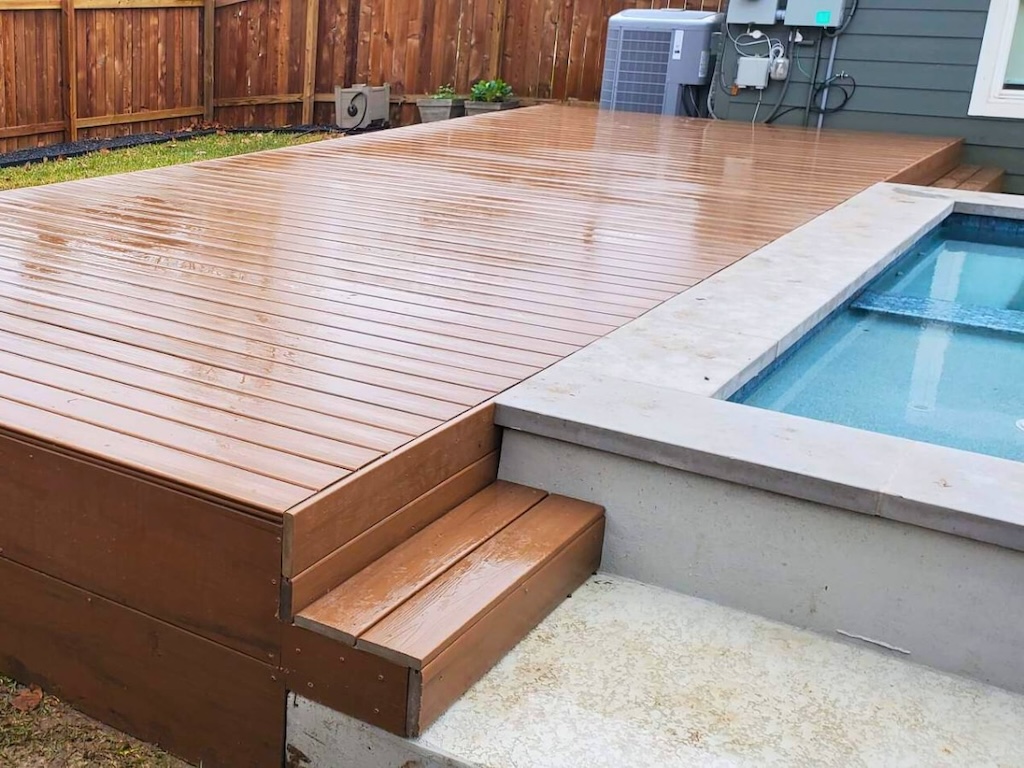
Transform your deck into a peaceful outdoor escape that’s private—without losing the fresh, open-air feel you love. Our Austin team specializes in custom privacy solutions that soften sightlines, reduce noise, and elevate comfort while maintaining natural, unobstructed airflow. From slatted screens and decorative panels to strategic plant integrations and partial enclosures, we tailor every design to your home, your style, and how you use your outdoor space. Each feature is built to withstand Texas weather and enhance the overall look of your deck. Whether you want a secluded reading corner, a more intimate hosting area, or simply a shield from nearby views, we can bring it to life. Call (512) 566-7519 or start your Austin deck estimate today to get your custom plan and pricing.