
TL;DR
Deck timelines in Austin aren’t “2–3 weeks, easy.” Real schedules align with design decisions, permitting/HOA requirements, footing choice, material availability, inspection cadence, and weather windows. Expect a typical sequence of consult → design/engineering (3–14 days) → permitting (1–3+ weeks) → site prep/footings (2–7 days) → framing/rough (1–2 weeks) → rail/lighting/finishes (3–10 days) → final inspection + punch (2–5 days). Add time for steep slopes, complex rails, rooftop waterproofing, or HOA seasonality. You can speed things up by locking selections early, submitting a complete package, choosing available materials, planning access and staging, and baking in inspection days instead of wishing them away. If you want an honest, site-specific schedule, our Austin team can walk the yard, flag bottlenecks, and give you a timeline that holds up in Texas weather—not just on paper.
Why Austin deck timelines drift (and how to bring them back)
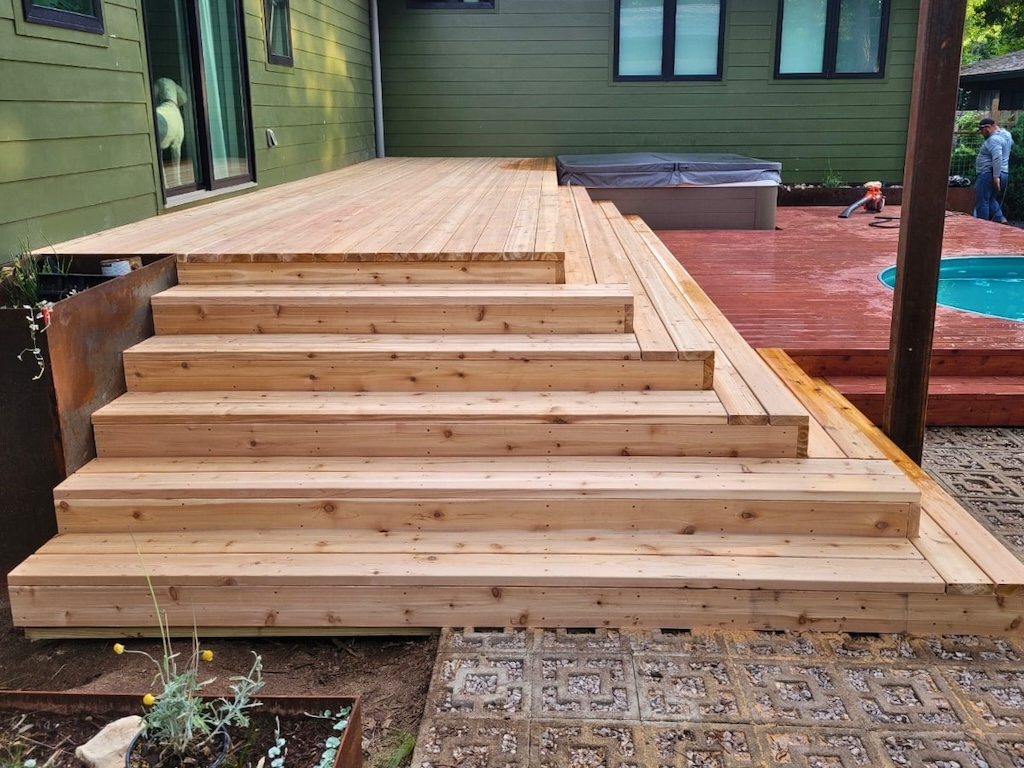
Austin is a tale of two calendars: the one you approve on a proposal and the one your yard and the city hand you. Slope, soils, tree rules, and wind exposure add steps; supplier lead times and inspection availability set the cadence. The fix is practical—not heroic: identify long poles (permits, footings, rails, lighting), freeze choices, and schedule inspections into the plan. Wherever possible, pick systems that reduce handoffs—fewer vendors mean fewer calendar collisions.
Early on, it helps to benchmark what’s typical for a yard like yours. If you want a quick read on exposure, access, and code touchpoints, our Austin deck team can walk the site and build a timeline that matches reality.
The end-to-end build path in plain English
Every project is unique, but the stages rhyme. Here’s the usual path and what moves each step faster—or slower.
Consult and measure
- What happens: On-site measure, photos, elevation checks, utilities, tree and drainage notes, and a discussion about use, privacy, budget, and style.
- Timebox: 1–3 days from inquiry to visit; same week is common outside holidays.
- Speed lever: Be ready with rough size, preferred materials, and must-haves vs nice-to-haves.
Design & engineering
- What happens: Layout options, structural assumptions, rail and stair decisions, and—if needed—engineering letters (slope, rooftop, over-garage).
- Timebox: 3–14 days, depending on complexity and engineer capacity.
- Speed lever: Freeze rail style, footing approach, and lighting early; they ripple into drawings and permit notes.
Permitting & HOA
- What happens: City submittal or Travis County, plus HOA packages where required.
- Timebox: 1–3+ weeks depending on backlog and completeness.
- Speed lever: Submit a complete set (plan, section, details, site plan, spec sheet). Missing a ledger or footing detail can push the review a complete cycle.
Procurement
- What happens: Order decking, framing hardware, rail system, lighting, membranes, and any helical or specialty footing equipment.
- Timebox: Parallel to permits when possible; 3–21 days depending on brand and color.
- Speed lever: Pick in-stock colors and standard rail families; custom powder- or glass-panels extend lead time.
Site prep and footings
- What happens: Demo, layout, utility locates, excavation or pile driving, inspections (footing or torque), and set bases.
- Timebox: 2–7 days for typical yards; add days for rock, tight access, or heavy roots.
- Speed lever: Choose footing methods appropriate to soils and access—helical piles can cut days on steep or tree-sensitive sites.
Framing and rough-in
- What happens: Beams, joists, blocking, ledgers (if used), rough electrical, and any under-deck drainage shell.
- Timebox: 5–10 working days for moderate decks; rooftop and multi-level builds add a week.
- Speed lever: Clean inspections—frame crews flow faster when hardware families and details are standardized.
Rail, stairs, lighting, and finishes
- What happens: Guard systems, stair runs/landings, step and post lights, and surface installation (composite/PVC, pavers, or hardwood).
- Timebox: 3–10 days, depending on footage and fixture count.
- Speed lever: Accurate material counts and pre-approved fixture families prevent mid-build pauses.
Final inspection & punch
- What happens: City/HOA sign-off, client walk-through, adjustments, and photo documentation of hidden flashings and membranes.
- Timebox: 2–5 days based on inspector schedules and punch size.
- Speed lever: Keep inspectors’ access clear and have drawings on site.
Design decisions that move weeks, not days
A handful of early choices dominate schedule risk—and opportunity.
- Rail family: Cable and glass are often the most lead-time-sensitive components. Slim metal pickets are quicker; benches-as-guards can trim rail footage (still designed to code).
- Footing system: Hand-dug piers require excavation and curing time; helical piles install quickly and load immediately (no curing), which can compress the schedule—especially on hillsides or over roots.
- Surface system: Porcelain pavers on pedestals go down quickly once the substrate is ready; diagonal composite layouts with picture-frame borders require more framing and time.
- Lighting: Decide fixture families and counts with the plan—wiring routes, transformer locations, and control zones should be set before framing.
Pro tip: Decide now whether the deck will attach to the house. A free-standing double-beam near the wall can avoid ledger complexity and weatherproofing delays if the wall condition is questionable.
Permits, HOAs, and inspections: who does what, when
Permits protect your safety and your resale value, but they add to the job’s cadence. Know the checkpoints.
- Submission package: Site plan with setbacks, plan/section with framing sizes, ledger detail, footing table, stair/rail details, lighting notes where applicable, and tree protection when required.
- HOA coordination: Elevations and material/rail palettes may need sign-off before city review. Some associations meet monthly—plan for that cadence.
- Inspection touchpoints: Footing (or torque logs for helicals), framing/rough, and final; rooftop waterproofing may get a separate membrane inspection.
- Who attends: Your contractor should meet inspectors and walk the plan; ensure that’s in the scope so you don’t become the scheduler.
If you want to preview the typical inspection cadence and what each checkpoint looks for, skim our deck installation timeline guide for Austin before design lock.
Footings and foundations: the schedule impacts a few people’s prices
Footings are where timelines get honest. The ground decides whether you dig fast, dig forever, or don’t dig at all.
- Concrete piers: Need excavation, potential bells, rebar cages, and cure time before loading. Rock layers or clay lenses can stall progress.
- Helical piles: Install with torque monitoring, carry load immediately, and shine on steep or tight sites—no holes to collapse, less spoil to haul.
- Micropiles/rock pins: When limestone is shallow, pinning to bedrock with small-diameter anchors avoids oversize pits.
- Free-standing vs ledger: Avoid ledger delays when the wall condition is unknown; a double-beam at the house line keeps waterproofing simple and inspections straightforward.
For a fast, inspection-friendly footing plan, our deck installation team in Austin can match foundation methods to your slope and soil so the schedule holds after you break ground.
Material lead times: decking, rails, lighting, and membranes
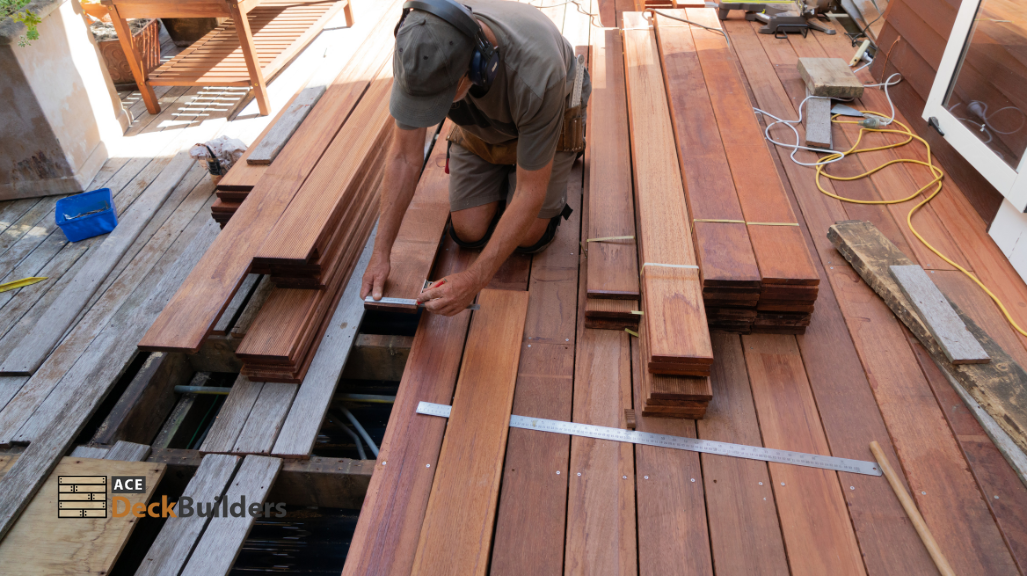
The calendar turns on what’s in stock. Here’s a practical read as of recent seasons (always verify during selections):
- Decking (composite/PVC): Many light- and mid-tone colors are stocked locally; deep variegates or specialty widths can add 1–3 weeks.
- Hardwoods: Seasonally variable; pre-finishing adds days.
- Rail systems: A slim metal picket is often the fastest; cable kits and glass panels run longer; powder-coat custom colors extend timelines.
- Lighting: Step and post fixtures are in stock; under-rail strips and smart controls may require lead time.
- Waterproofing (rooftop/over-garage): Membranes and pedestals are usually fast, but sub-trades (roofers) must align calendars.
Lock selections early and ask suppliers for realistic ETAs before you publish a start date to your family or HOA.
Weather and work windows in Central Texas
Heat, storms, and daylight drive productivity as much as manpower.
- Summer heat: Crews shift earlier; adhesives and membranes need cooler windows; staging shade over work zones speeds installs and keeps everyone safer.
- Storm bursts: Plan drainage and mud control for the site; keep materials off bare soil. Loss of a footing day often ripples for a week if inspections were stacked.
- Shoulder seasons: Late winter and spring make great build windows—cooler temps, easier finishing, and inspection backlogs tend to be lighter than midsummer growth spurts.
- Sunset and noise rules: HOA or city restrictions may shorten working hours seasonally; check ahead.
Access, staging, and neighbors: logistics that save days
A deck build is a small logistics operation. Smooth access saves hours that add up to days.
- Access paths: Wide gates, fence panels temporarily removed and reinstalled, and plywood on turf prevent delays and property damage.
- Staging: A modest driveway footprint for a dumpster and material drop avoids rehandling.
- Utilities: Mark sprinkler heads and shallow lines; relocate AC condensate discharges away from stair landings.
- Neighbors: Give them the plan and timeline; a friendly heads-up reduces friction when trucks show up.
Realistic ranges: simple, moderate, and complex projects
Every yard’s different, but these bands help set expectations once permits and selections are locked:
- Simple projects
- Single-level, rectangular deck off the back door, slim metal picket rail, no kitchen, straightforward footings.
- Build duration: ~2–3 weeks on site after permits; add 1–3 weeks for permitting.
- Risks: Weather, inspector availability.
- Single-level, rectangular deck off the back door, slim metal picket rail, no kitchen, straightforward footings.
- Moderate projects
- Multi-landing stairs, modest tiering, cable rail on the view side, basic lighting.
- Build duration: ~3–5 weeks on site after permits are issued.
- Risks: Rail lead times, footing surprises on slopes, and HOA reviews.
- Multi-landing stairs, modest tiering, cable rail on the view side, basic lighting.
- Complex projects
- Rooftop or over-garage decks, steep slopes with helical/micropiles, glass or custom rail, integrated kitchens and privacy screens, and under-deck drainage.
- Build duration: ~5–8+ weeks on site after permits; may require multiple inspections and sub-trade coordination.
- Risks: Weatherproofing inspections, roofer calendars, and custom fabrication.
- Rooftop or over-garage decks, steep slopes with helical/micropiles, glass or custom rail, integrated kitchens and privacy screens, and under-deck drainage.
How to actively shorten your start-to-finish time
You can’t control the weather, but you can control surprises.
- Decide early: Lock rail family, color, lighting, and footing approach before drawings.
- Package permits well: Submit a complete set—missing ledger or footing details are the #1 review kickback.
- Pick in-stock: Choose locally stocked colors and rail families; save custom powder for later upgrades.
- Choose build-friendly systems: Helical piles for steep or root-heavy yards; free-standing frames when wall conditions are unknown; pedestal pavers over waterproofing.
- Plan inspections into the calendar: Don’t stack milestones back-to-back without a buffer day for inspector windows.
- Keep the site ready: Clear access daily; protect turf; keep drawings on site; make real-time decisions when the crew asks.
- Communicate: One point of contact and quick approvals keep crews moving.
If you want a reality-checked schedule and a build method that matches your yard, our deck installation team in Austin can spec a path that avoids common delays.
FAQs
Get a Project Timeline Built for Your Yard, Your HOA, and Austin Weather
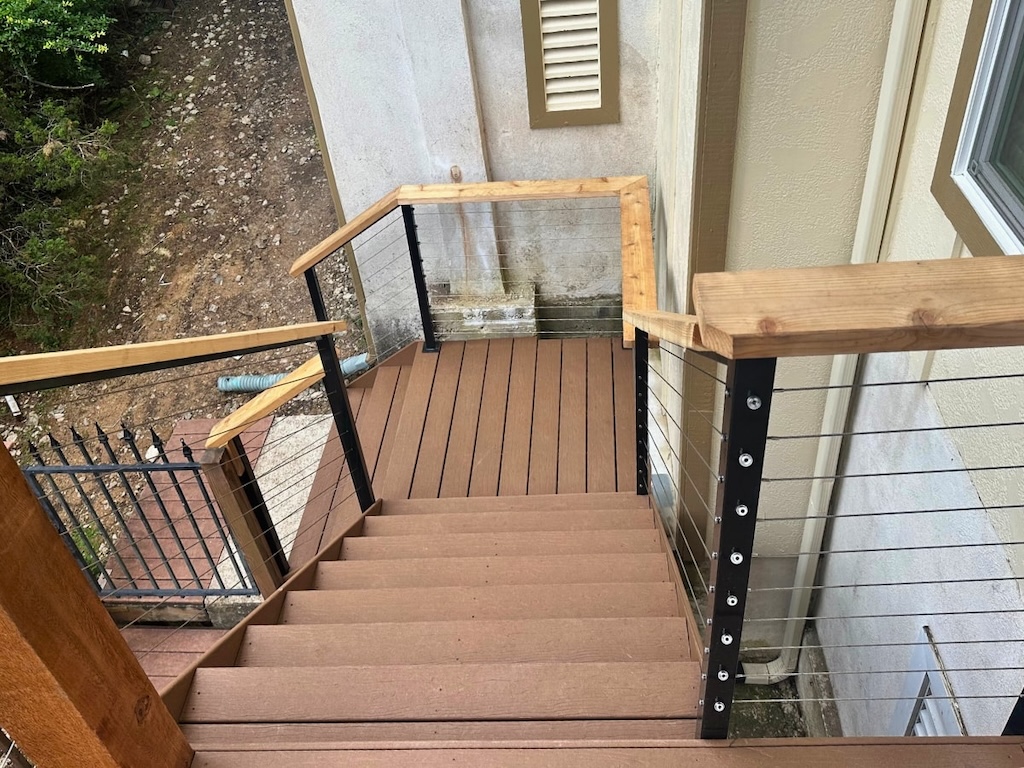
Stay ahead of delays, surprises, and failed inspections with a timeline designed around your conditions—not a generic construction schedule. We start by measuring your yard, noting access points, utilities, drainage patterns, and any site factors that affect build speed. Then we review HOA requirements, permitting needs, and seasonal Austin weather patterns to map a realistic, efficient timeline that keeps things moving smoothly. Every phase is planned with intention—from material lead times to inspection checkpoints—so you know exactly what happens when and why—fewer holdups, fewer revisions, and a more straightforward path to completion.
Call (512) 566-7519 or start here by requesting your Austin deck estimate to get a custom project plan and timeline.