
TL;DR
Tiered decks tame Austin’s tricky slopes by stepping living space down the hill in safe, code‑compliant platforms. Smart tiering starts with drainage and soil stability, then matches footing type to slope and soil (think helical piles on steep grades, beefed‑up concrete piers where limestone is shallow). Use short, intimate platforms tied together with landings and low rises, keep sightlines open with cable/metal railings, and plan lighting and water management from day one. Expect 2–6 weeks for most tiered builds, depending on access and permitting. When done right, you’ll gain usable square footage without massive retaining walls—and your deck will feel connected to the Hill Country landscape.
Austin slopes, soils, and what they mean for decks

Austin yards aren’t flat for long. Between caliche, clay pockets, and shallow limestone ledges, a backyard can change elevation by 3–8 feet over a short run. Those conditions drive three key decisions for tiered decks:
- Load paths: Shorter spans and more posts reduce wobble on downhill tiers.
- Footings: Piers or helical piles must reach undisturbed bearing or torque values, especially when clay swells or topsoil is thin.
- Water: Every tier needs a clear path for water under and around the structure so soil doesn’t migrate and stairs don’t settle.
Pro tip: Before you sketch layouts, walk the lot after a rain to see how water moves. If you’re unsure about bearing or you hit the ledge early, schedule a deck inspection to set the footing strategy and layout right the first time. If you want a quick sanity check on your slope, our Austin deck team can walk the site with you.
Before you sketch layouts, walk the lot after a rain to see how water moves. If you’re unsure about bearing or you hit the ledge early, schedule a deck inspection to set the footing strategy and layout right the first time.
Interested in a site‑specific look? Book a no‑pressure deck estimate, and we’ll map elevations, soil, and access during a free site visit.
Tiering concepts that work on real Austin lots
Tiered decks turn a steep yard into a sequence of small, usable rooms. Here are layouts we’ve built repeatedly in hilly neighborhoods from Westlake to Steiner Ranch:
Split‑entertainment tiers
Create a grilling/dining platform off the back door, a couple of steps down to a lounge/fire‑pit tier, and another step down to a turf or play area. Short runs of stairs and landings break up the drop, so you never feel like you’re climbing bleachers.
View‑preserving terraces
Keep uphill tiers shallow so they don’t block interior sightlines. Use cable or slim metal railings to preserve the Hill Country view, and allocate more square footage to the lowest tier, where privacy increases.
Pool‑adjacent platforms
Where a pool sits below the main floor, a mid‑tier “transit” deck with a wide landing makes wet‑foot traffic safer and simpler. Integrated benches double as guard edges without bulky rails.
Garden connectors
On moderate slopes, two or three small decks linked by stone or decomposed‑granite paths create a natural, low‑maintenance transition. This blends hardscape and deck in a budget‑friendly way.
Design guardrails: Keep any single tier to a comfortable size (often 120–240 sq ft) to avoid a monolithic look. Use landings every 12–14 risers, and shift stair runs to hug the grade so the structure feels anchored rather than perched. For complex yards, our deck installation team in Austin can help you choose a tiering concept that fits your slope and budget.
Foundations that hold on hillsides
Footings are where hillside decks live or die. Choose based on slope, access, soil, and inspection requirements.
Concrete piers
- Best where you can auger to competent material (often 24–36 in., but deeper if clay).
- Bell the base where possible; use uplift protection on wind‑exposed ridges.
- Sonotubes sized to post load; rebar cages on taller piers; Simpson Strong‑Tie or equivalent post bases.
Helical piles
- Ideal for steep or tight‑access sites where digging is difficult or undermines the slope.
- Installed to engineer‑specified torque; immediate load capability reduces site time.
- Brackets support beams without large excavations; great near heritage trees to minimize root disturbance.
Micropiles / rock pins
- Where you hit a limestone ledge, shallow, small‑diameter drilled anchors with epoxy or grouted pins give reliable bearing without oversize holes.
Ledger strategy
Lower tiers are often free‑standing; the uppermost tier may ledger into the home only if the attachment point meets structural and flashing requirements. On step‑down lots, it’s common to avoid ledgering and run double beams near the house to keep water out of the building envelope.
Safety callout: Any ledger must get continuous flashing, a positive slope away from the wall, and through‑bolt attachment into proper framing—never into brick veneer or siding alone. If there’s doubt, keep it free‑standing.
For deeper context on footing choices and inspection expectations, see our Austin deck footing requirements guide.
Framing details that keep tiers tight and quiet
- Span discipline: Shorter joist spans reduce bounce on lower tiers. Composite decking often wants 16 in. on‑center (12 in. for diagonals).
- Drop beams, not stilt legs: Use dropped beams close to grade on lower tiers to avoid tall, spindly posts. Where posts must be tall, choose larger dimensions, bracing, and hardware rated for the load path.
- Hardware: Through‑bolted connections, hurricane ties, diagonal bracing on frames, and concealed‑head fasteners for clean walking surfaces.
- Thermal movement: Composite boards expand across temperature swings; leave proper end gaps and use manufacturer‑approved hidden fasteners.
- Acoustics: Add joist tape and solid blocking at mid‑span to cut squeaks and improve feel.
Railings, stairs, and lighting for safe transitions
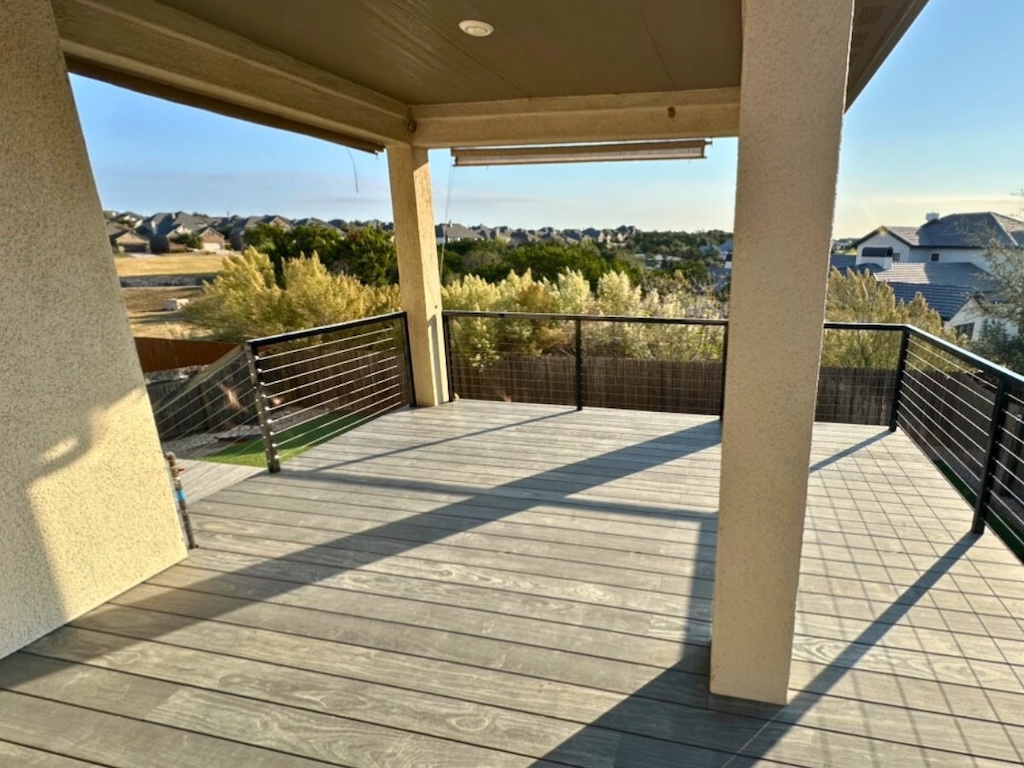
- Railings: Cable or slim steel balusters preserve views; composite rails where low maintenance is critical. Guard height and opening sizes must meet current code.
- Stairs: Short flights with broad landings reduce perceived height; closed risers with textured treads improve footing. Consider gate hardware near pool‑adjacent runs.
- Lighting: Low‑voltage step and post lighting on sensors/timers. Illuminating landings and directional changes is more important than flooding entire tiers.
Drainage, erosion control, and landscape tie‑ins
- Under‑deck water: Encourage cross‑flow with 3–6 in. clearance and clean, graded substrate. In high‑flow zones, French drains or swales route water around posts.
- Surface shedding: Pitch decking away from the house; terminate boards over drip gaps, not continuous dams.
- Erosion control: Fabric + gravel under lower tiers; on steeper cuts, integrate small retaining edges or vegetated terraces. Coordinate downspouts to miss stair landings.
- Landscape: Decomposed‑granite landings, native plantings, and stone borders make the structure feel designed for the site rather than dropped on it.
Timelines, permits, and inspections in the Austin area
- Consult & design: 3–7 days for site measurement, concept development, and budget alignment.
- Engineering & permit set: 1–2 weeks, depending on footing type and complexity.
- Permitting & HOA: Varies by jurisdiction; many projects move in 1–3 weeks with complete plans.
- Build: 2–6 weeks, depending on access, weather, and the number of tiers.
- Inspections: Typical touchpoints include footing, framing, and final. Some hillside foundations require a torque/installation report or an engineer’s letter.
Heads‑up: Utility locates and tree‑protection measures can add a few days—plan for them early so you don’t lose momentum mid‑build. Before you submit plans, you can book a deck inspection to validate the footing strategy and speed approvals.
Costs, assumptions, and value engineering tips

Pricing changes with market rates and site complexity, so always evaluate with explicit assumptions. A common tiered project might assume:
- Decking: Mid‑grade composite
- Size: 2–3 tiers totaling ~300–500 sq ft
- Rail: Cable or metal on exposed edges, bench guards where privacy helps
- Footings: Mix of concrete piers and a few helical piles on steep edges
- Access: Standard (no crane)
Typical ranges:
- Design + engineering: Low thousands depending on reports required.
- Construction: Ranges scale with footing count, rail length, and stair complexity; multi‑tier builds cost more per square foot than single-tier builds because of landings and rail.
Ways to control cost:
- Keep tiers compact and focus square footage where you’ll actually use it (dining/lounging).
- Use benches as guards to reduce the cost of rail footage.
- Align joist direction to minimize waste on board cuts.
- Combine stone/gravel paths between small platforms instead of connecting everything with a framed deck.
Maintenance, seasonal checks, and long‑term durability
- Rinse pollen and dust; spot‑clean algae where shade and drainage meet.
- Inspect posts, bases, and hardware annually—tier transitions and stair stringers are most stressed.
- Refresh protective finishes on wood elements; composites still need clean hardware and gap maintenance.
- Clear leaf traps at landings and under‑deck drains before heavy rains.
Safety reminder: If a big storm undercuts soil around posts or stairs, settle, pause us,e and schedule an inspection before you resume entertaining.
FAQs
Make the Most of Your Austin Landscape
Turn that slope into a showcase deck. Call (512) 566-7519 or start your deck estimate to see what’s possible.