Ace Deck Builders

West Lake Hills Deck Builder for Hillside Lots

Ace Deck Builders builds, inspects and repairs decks for homes in West Lake Hills, TX 78746. Our crew plans every project around the city’s hillside lots, its tree rules and its own permit process, which runs separately from Austin’s.

Call Now

(512) 566-7519

Request Free Estimate
  • This field is for validation purposes and should be left unchanged.

If you’re looking for a deck builder in West Lake Hills, you already know the lots here rarely sit flat. The city was incorporated in 1953 and grew fastest through the 1970s and 1980s along Bee Cave Road, at the eastern edge of the Edwards Plateau, so many homes sit on slopes with rock close to the surface and established trees all around. A deck has to work with all three. Book a West Lake Hills site visit and we’ll start with the lot as it is.

Ace Deck Builders is veteran-owned and fully insured. Every project starts with a written, photo-documented inspection, and we’ve been building and repairing decks around Austin since 2008.

A Separate City With Its Own Permit Process

West Lake Hills is its own city, so deck permits go through the City of West Lake Hills, not Austin. Its Building & Development department takes submissions through an online portal, works from the 2021 International Codes and asks residential applicants for a tree and topographic survey, tree protection locations on the site plan and impervious cover figures. We handle permits through trusted third-party partners, and we plan the design around those requirements so the drawings are ready when they’re submitted.

Trees Come First

West Lake Hills doesn’t allow trees or vegetation to be removed without a permit, beyond routine yard care. Our crew maps the trees around a planned deck before setting any footing locations. We’d rather shift a post, span a beam farther or change the deck’s outline than design around a tree that has to come out.

Slopes and Shallow Rock

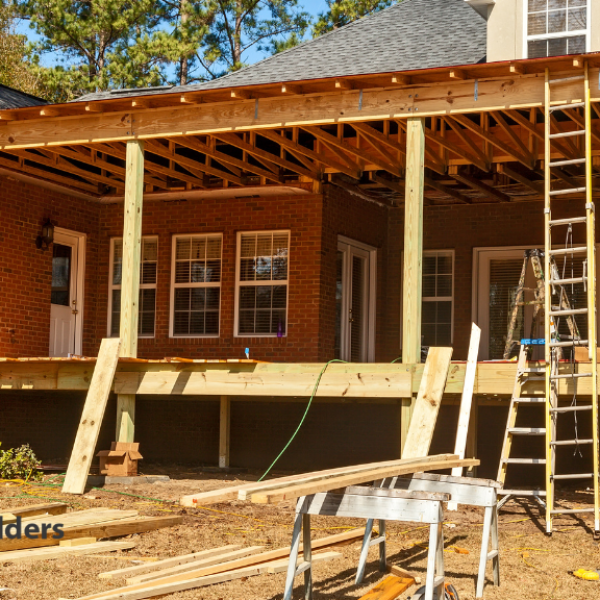
On a sloped lot, a deck can sit near grade at the house and stand well above the yard at its outer edge. That changes post heights, bracing and stairs, and footings are planned differently where rock sits close to the surface. For steeper sites, a multi-level deck that steps down the grade is often easier to live with than one tall platform.

Older Decks in West Lake Hills

Plenty of decks here date from the city’s growth decades, and some have been extended or patched since. Our deck inspection process starts at the house connection, checking the ledger and flashing, then works through joists, posts, footings and railings. On hillside decks, the tall outer posts get extra attention, since water running downhill keeps their bases wet.

When the structure is sound, targeted hillside deck repairs usually make more sense than a rebuild. When it isn’t, we’ll say so plainly and show you why in the written report.

Materials for Shaded, Sloped Lots

We build in cedar and pressure-treated pine, and in composite decking from Trex and TimberTech, with Fiberon on request. Under heavy tree cover, composite holds up well because it doesn’t need yearly staining, though leaves still need clearing and the boards an occasional wash.

Why-Decks-in-Austin-Are-Particularly-Expensive

How a West Lake Hills Project Runs

Here’s the usual order. We’ll walk the lot and inspect any existing deck, then draw the design and show you 3D renderings. Once you’ve approved it, the survey details and drawings go to the city with the permit application, and we don’t order materials until it’s issued. If the city comes back with comments, we’ll handle the revisions, so you aren’t left sorting out a review you didn’t expect.

Rob Roy and Nearby Areas

We also work in Rob Roy, the community off Bee Cave Road west of Loop 360. Rob Roy sits outside West Lake Hills city limits, so we confirm which rules apply to each property before design starts. Nearby, we cover Rollingwood decks and Lost Creek hillside decks, along with homes across 78746.

West Lake Hills is part of our Central Texas service area, and you can see more of our Austin deck work.

Start With a Site Visit

Call (512) 566-7519 to book a visit. Most inspections are scheduled within the same week, and you’ll get written findings and photos before any quote. We’re open Monday to Friday, 8 AM to 6 PM, and Saturday, 9 AM to 4 PM. Every finished project carries our 1-year workmanship warranty.

Call Now

(512) 566-7519

West Lake Hills Deck FAQs

In most cases, yes. West Lake Hills requires a building permit when a structure is built or altered, apart from work the 2021 International Residential Code exempts. Permits go through the city’s Building & Development department, not Austin, and the application asks for a tree and topographic survey and impervious cover figures. We handle permits through trusted third-party partners and plan the design to match.

Usually, yes. West Lake Hills requires a permit to remove trees, so we treat them as fixed and design around them. That can mean shifting footings, adding a beam so the deck spans farther between supports, or changing the deck’s outline. Our crew maps trees and their likely root areas during the site visit, before any layout is drawn.

We start with the slope and the soil. Post heights, bracing, stairs and footing locations all change when a deck sits higher at its outer edge than at the house, and rock near the surface affects how footings are set. Many steep sites work better with a multi-level design that steps down the grade with landings rather than one tall platform.

Start with the inspection. If the ledger, joists, posts and footings are sound, targeted repairs usually make more sense. If the support structure has deteriorated, especially the tall outer posts and their footings, replacement is often the safer choice. You’ll get a written report with photos and a clear recommendation before any quote.

Yes. We work in Rob Roy and across the 78746 area, including West Lake Hills, Rollingwood and Lost Creek. Rob Roy sits outside West Lake Hills city limits, so the rules that apply there can differ from the city’s. We confirm the permit path and any neighborhood review for each property before design starts.

Composite decking from Trex or TimberTech, with Fiberon on request, holds up well under trees because it doesn’t need yearly staining or sealing. It still needs leaves cleared from the surface and the gaps, plus an occasional wash. Cedar and pressure-treated pine work too, but shade keeps wood damp longer, so they need regular staining and sealing.