Ace Deck Builders

Ace Deck Builders

deck staining in Austin by Ace Deck Builders

Clear, Semi-Transparent, or Solid? Picking a Stain That Lives in Austin

TL;DR Austin’s UV, heat, and storm bursts are brutal on deck finishes. Clear looks natural but protects the least and needs frequent re‑coats. Semi‑transparent balances grain visibility with UV blockers and is the best all‑around for most Austin decks. Solid hides flaws and blocks UV best, but it’s a film that can peel if prep

Clear, Semi-Transparent, or Solid? Picking a Stain That Lives in Austin Read More »
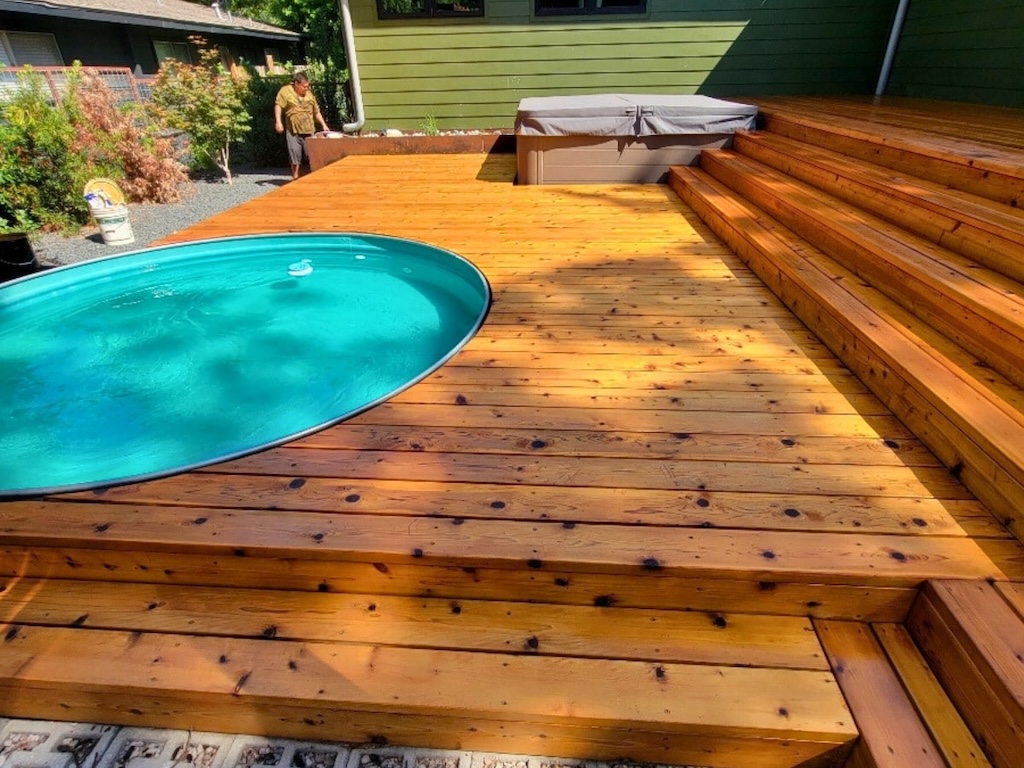
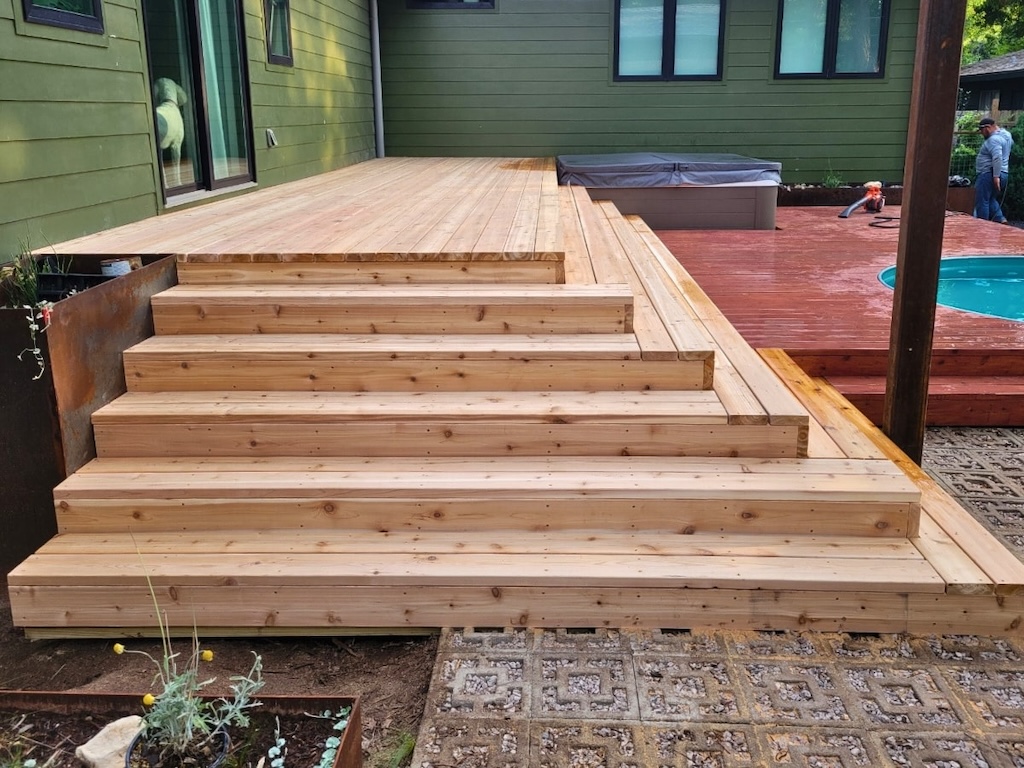
A sunlit wooden deck with an oval pool and multi-level steps. A man tends plants in the corner, creating a serene backyard atmosphere.

Fasteners & Flashings that Survive Austin’s Heat and Storms

TL;DR Austin decks fail early when the wrong metals are exposed to heat, UV, and sudden downpours. Choose corrosion‑resistant fasteners (hot‑dip galvanized or stainless: 304 inland, 316 near pools/splash) matched to your lumber chemistry; use structural screws instead of lag bolts where possible; and detail high‑temp butyl flashings with real terminations (end dams, counter‑flashing, drip

Fasteners & Flashings that Survive Austin’s Heat and Storms Read More »

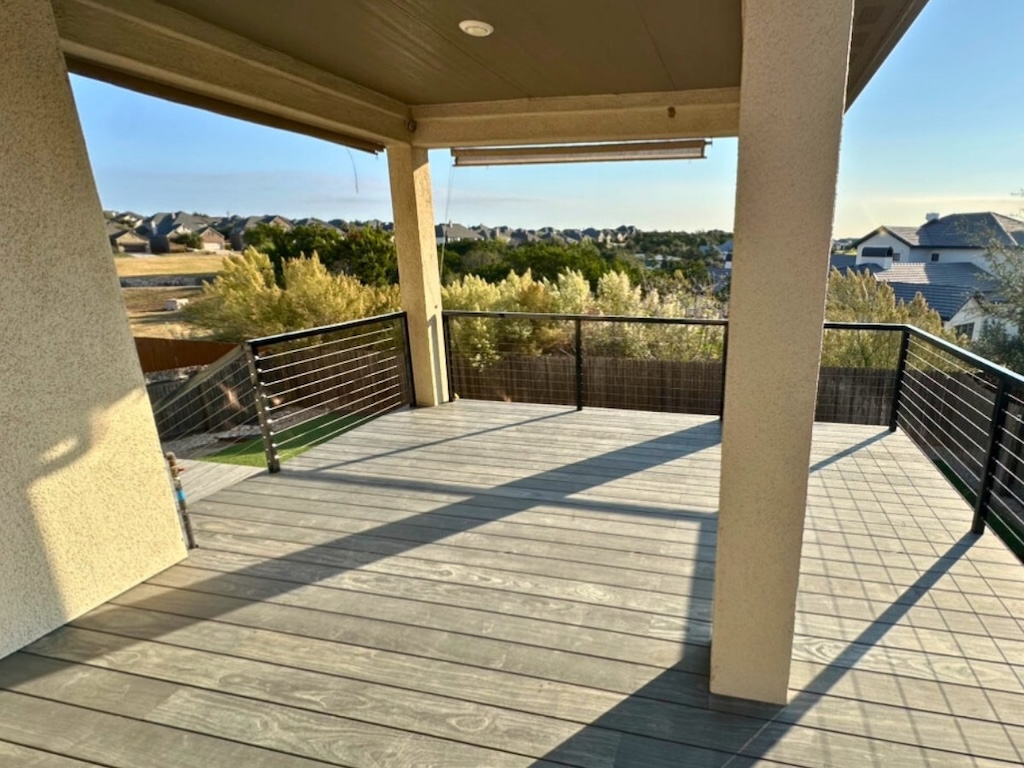
Covered wooden deck with metal railing, overlooking a suburban landscape with houses and trees in the distance. Sunlit and open, conveying tranquility.

End-Grain Matters: How to Stop Wick-Rot on Austin Decks

TL;DR Most deck rot in Austin starts at end‑grain: the straw‑like fibers at board ends, post bottoms, and cut penetrations that wick water. Stop “wick‑rot” by sealing every cut edge, elevating posts off concrete, flashing ledgers correctly, and keeping water moving with drip gaps and joist tape. Choose finishes that block moisture, add borate treatment

End-Grain Matters: How to Stop Wick-Rot on Austin Decks Read More »

Wide wooden deck with multiple steps leads up to a green house. A smaller deck surrounds a hot tub and pool. Calm atmosphere with greenery.

Hot Boards vs. Cool Boards: Austin Heat Tests by Color & Texture

TL;DR Austin sun punishes dark, glossy decking. In side‑by‑side heat tests, lighter hues and matte/textured caps stayed more comfortable, and assemblies with airflow underneath cooled faster. PVC and certain light‑tone capped composites typically ran cooler than dense, dark boards; porcelain pavers on pedestals were among the coolest. If you love rich colors, add shade and

Hot Boards vs. Cool Boards: Austin Heat Tests by Color & Texture Read More »

black steel chairs on wooden deck

Quiet & Private: Deck Screening That Still Lets the Breeze Through

TL;DR You don’t need a solid wall to make your deck feel secluded. In Austin, the winning combo is air‑permeable screens (slatted wood/composite, laser‑cut metal, cable grids with climbers) + strategic placement (angle and height tuned to the neighbor sightline and wind) + noise‑softening surfaces (plants, rugs, upholstered benches). Keep guards code‑compliant, align posts with

Quiet & Private: Deck Screening That Still Lets the Breeze Through Read More »

Modern backyard with a rectangular pool, surrounded by a gray deck. The pool has colorful floating toys. A large, white house with a patio is in the background. Vibrant green trees and a wooden fence frame the scene, conveying a peaceful, leisurely atmosphere.

Pool-Adjacent Decks that Stay Cool and Non-Slick

TL;DR In Austin’s heat, poolside decks need two things most: low surface temperature and reliable wet‑foot traction. Start by choosing lighter‑colored, low‑mass surfaces (porcelain pavers on pedestals, capped PVC/composite boards rated for high slip resistance, or dense tropical hardwoods with textured finishes). Design for water movement: pitch away from the pool, break up sheets with

Pool-Adjacent Decks that Stay Cool and Non-Slick Read More »

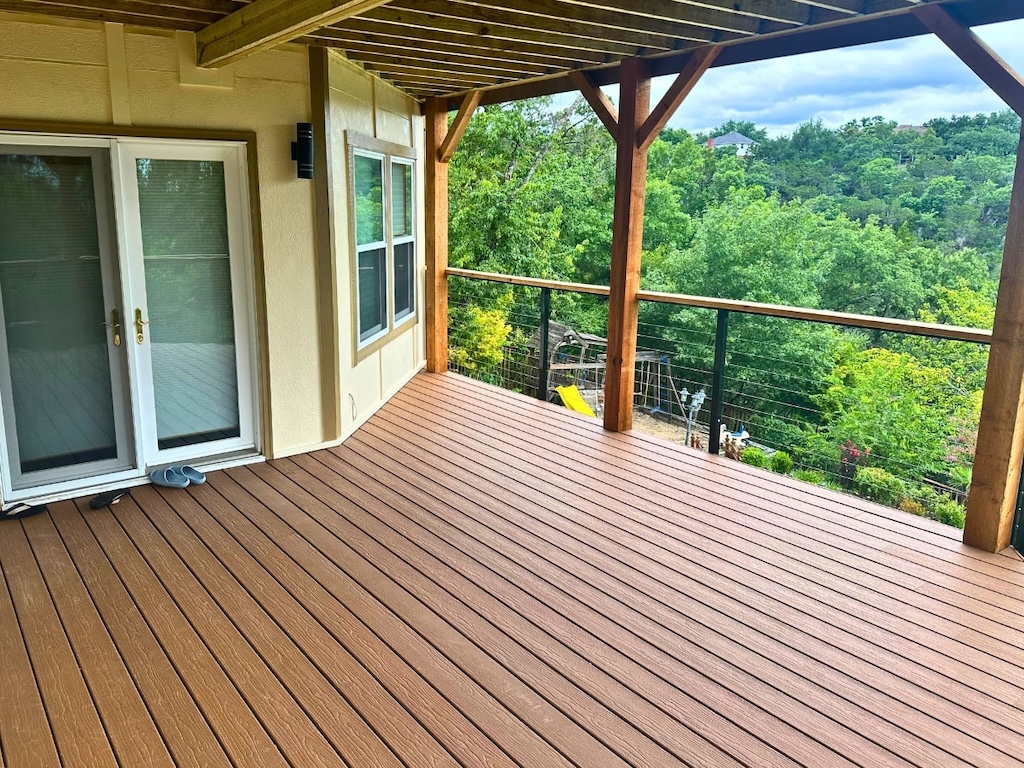
wooden deck with cable railing overlooks lush green trees. The roof and beams provide shade, creating a serene, natural atmosphere.

Rooftop & Over-Garage Decks: Waterproofing, Wind, and Access

TL;DR Rooftop and over‑garage decks add outdoor space without expanding your footprint, if waterproofing, wind design, and access are dialed in. Treat the roof as a system: continuous membrane (or liquid‑applied) with protected transitions, a floating deck surface on pedestals or sleepers that won’t trap water, and edge/penetration details signed off by an engineer. In

Rooftop & Over-Garage Decks: Waterproofing, Wind, and Access Read More »

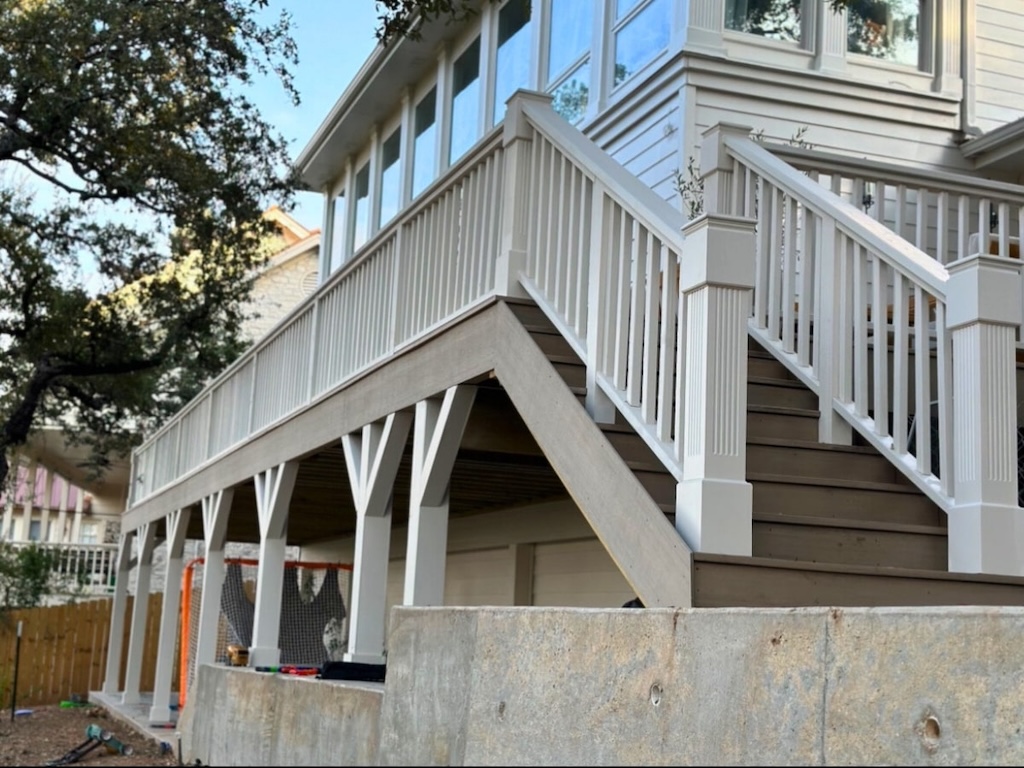
Elevated white deck with wooden stairs and railing, attached to a house. Overlooking tall trees and a sunny yard, creating a serene atmosphere.

Slope-Savvy Decks: Tiering Strategies for Austin Yards

TL;DR Tiered decks tame Austin’s tricky slopes by stepping living space down the hill in safe, code‑compliant platforms. Smart tiering starts with drainage and soil stability, then matches footing type to slope and soil (think helical piles on steep grades, beefed‑up concrete piers where limestone is shallow). Use short, intimate platforms tied together with landings

Slope-Savvy Decks: Tiering Strategies for Austin Yards Read More »

Covered wooden deck with railing, overlooking lush green trees and a distant house. Glass doors and slippers suggest relaxation. Bright, serene atmosphere.

Annual Deck Safety Check in Austin: A Seasonal Walkthrough You Can Do

TL;DR Austin decks live under high UV, long hot spells, clay soils, and pop-up storms. A 60–90-minute seasonal walkthrough, as outlined in the deck safety checklist, prevents minor issues from becoming costly repairs. Work clockwise: start at the house connection (ledger & flashing), then move through footings/posts, beams/joists, decking, rails/stairs, and utilities. Look for wobble,

Annual Deck Safety Check in Austin: A Seasonal Walkthrough You Can Do Read More »

Two-story house with large upper deck featuring black railings and wooden stairs. Overcast sky, trees in background, conveying a calm suburban setting.

Guard & Stair Rules in Austin: Clearances, Loads, and Common Fail Points

TL;DR Austin decks pass or fail inspection at the guards and stairs. Know these basics according to building codes : guard height typically ≥36 in. on most residential decks; baluster/rail infill must block a 4-in. sphere; stairs need consistent rise/run (no trip steps), graspable handrails, and safe landings; guards and handrails must resist concentrated and

Guard & Stair Rules in Austin: Clearances, Loads, and Common Fail Points Read More »