Ace Deck Builders

Deck Design Built Around Your Property, Not a Template

Custom deck design in Austin means a deck planned around your specific property: the slope of the lot, the soil underneath it, drainage, code requirements, and how your household actually uses the space. The design starts with the site, not a catalog.

Call Now

(512) 566-7519

Request Free Estimate
  • This field is for validation purposes and should be left unchanged.

At Ace Deck Builders, custom doesn’t mean expensive add-ons or showpiece features. It means the deck fits your lot instead of fighting it. A property in Travis Heights with mature live oaks needs a different footprint than a sloped lot in Northwest Hills with limestone two feet down. Same square footage, completely different builds. We design for the conditions you have, and we put the reasoning in writing so you can see why each decision was made. If you’re starting this process with an existing deck on the property, the right first step is usually a look at how our deck inspection process works, because what’s already there shapes what we’d recommend building.

Why-Preparation-is-Key-to-Successful-Deck-Installation

Every Ace design works through the same five questions. The answers come from your lot, your budget, and your use, in that order.

The lot

Grade, soil type, drainage paths, tree roots, and setback lines. Central Austin sits on expansive clay; the Hill Country side of town runs limestone with shallow soil. Footing design changes accordingly, and so does the cost of getting it wrong.

The code

Railing heights, stair geometry, ledger attachment requirements, and load specifications. Permits run through our trusted third-party partners, who handle submissions with the City of Austin and surrounding municipalities. Designing to code from the start beats redesigning at inspection time.

The materials

Pressure-treated pine, western red cedar, or composite. The right answer depends on sun exposure, maintenance appetite, and budget. You can compare what goes into a wood deck installation against our composite deck installation options to see the tradeoffs laid out.

The footprint

Size, shape, height, and orientation. A deck that catches the west Texas sun at full strength in August gets used three months a year. One oriented for morning light and afternoon shade gets used nine. This is the part of design that costs nothing extra and matters most.

The structure

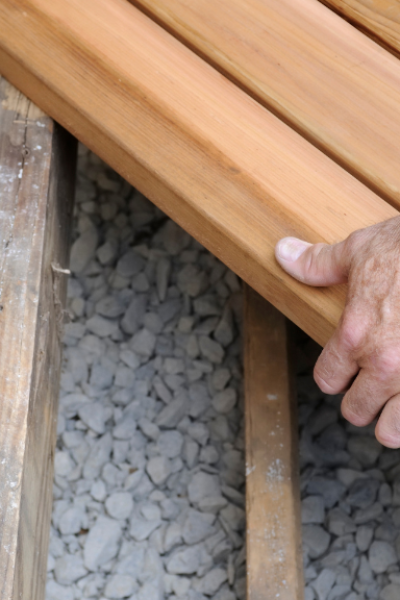
Framing plan, post placement, hardware spec, and connection details. The parts you never see are the parts that decide how long the deck lasts. We spec them in writing before work starts.

Before You Design Anything: Repair, or Replace?

Here’s something most deck companies won’t tell you: a good share of the homeowners who call us about a new custom deck don’t end up needing one. They have an existing deck with problems, and the assumption is that problems mean replacement. Sometimes they do. Often they don’t. The honest answer comes from the structure, not the sales pitch, and it starts with an inspection.

How we make the call

Our crews work through four questions, in order. Each one has a clear threshold.

1

Is the frame sound?

The ledger connection, joists, beams, and posts are the deck’s skeleton. If they’re solid, almost everything else is repairable. If the ledger has separated or the joists have rot you can push a screwdriver into, the math changes fast.

2

What share of the deck needs work?

Our rule of thumb: when 20 percent or less of the boards and railings need attention and the frame is sound, repair wins. Past 50 percent, replacement usually costs less over a ten-year window, even before you count the disruption of repeated fixes.

3

Does the deck meet current code?

Older decks were often built to standards that no longer pass. Railing height, baluster spacing, and ledger attachment rules have all tightened. A deck that needs structural work and a code update at the same time is usually telling you something.

4

How many good years are left?

A repaired deck should buy you five or more years of safe use. If the honest projection is two or three years before the next major repair, putting that money toward replacement makes more sense. We’ll show you the projection, not just the invoice.

The full assessment is part of every inspection, and the findings come to you as a written, photo-documented report. If the answer is repair, take a closer look at the deck repair services we offer in Austin. If the surface has weathered but the structure is fine, the better path may be our deck staining and restoration work. And when the numbers point to starting over, that’s when design enters the picture, which brings us to the part most homeowners actually enjoy.

Why-Deck-Installation-is-a-Great-Investment

How Installation Works

Once the design is set, installation follows a fixed sequence. Knowing it ahead of time makes the project predictable.

Demolition and disposal come first on replacement projects. We remove the old structure and haul it, and this is where surprises live: hidden ledger damage, undersized footings, improvised framing from a previous owner. The design accounts for what we expect; the first day of demolition confirms it. Learn how our deck replacement process works if you’re starting from an existing deck.

Footings and framing follow. Footing depth and diameter come from the soil assessment in the design phase. Framing goes up to the written spec: joist sizing, spacing, hardware, and flashing. This stage is where the deck’s lifespan is actually decided.

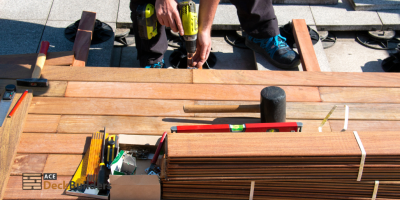
Decking, railings, and stairs finish the build. Surface material goes down, railings get set to code height with proper post blocking, and stairs are cut to consistent rise and run. For new construction without an existing deck, see what’s included in a new deck installation for the full sequence.

A final walkthrough closes the project. We review the build against the written spec together, and the one-year workmanship warranty starts from completion. Most single-level projects run one to two weeks from demolition to walkthrough, weather permitting.

Why Homeowners Choose Ace for This Work

We’re fully insured, and every project carries a one-year workmanship warranty. Permits run through trusted third-party partners. The design reasoning, the inspection findings, and the build spec all come to you in writing. And because we make our living on inspection, repair, and honest replacement rather than upselling design features, our recommendation doesn’t change based on what’s profitable. It changes based on what your deck needs.

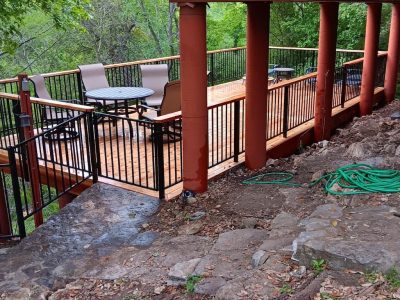
Wooden deck with metal railings, table, and chairs overlooking lush green trees. Earthy tones and hoses on rocky ground suggest a serene, rustic setting.

Where We Work

We design and install decks across Austin, Round Rock, Cedar Park, Leander, Georgetown, and Pflugerville, and throughout the Hill Country communities of Lakeway, Bee Cave, and West Lake Hills. Hill Country lots bring steeper grades and shallower soil than central Austin, which is exactly the kind of site condition this design process is built for. When you’re ready to talk through a project, you can request a deck estimate online or call (512) 566-7519.

Call Now

(512) 566-7519

Frequently Asked Questions

It means the deck is designed around your property’s actual conditions: lot slope, soil type, drainage, setbacks, code requirements, and how you use the space. It doesn’t mean showpiece features or designer add-ons. The design work produces a written plan covering footprint, materials, framing spec, and the reasoning behind each choice, so you can see why the deck is shaped the way it is.

Four questions decide it: whether the frame is sound, what share of components need work, whether the deck meets current code, and how many good years a repair would buy. As a rule of thumb, a sound frame with 20 percent or less needing attention points to repair. Past 50 percent, or with structural and code problems stacked together, replacement usually wins. An inspection settles it with evidence.

Yes, and most replacements should be. The old deck’s footprint reflects decisions made decades ago, often by a builder who never saw how your household uses the yard. Replacement is the one chance to fix orientation, resize, change the stair location, or switch materials without paying a premium for the change. We treat every replacement as a design project, not a copy job.

Pressure-treated pine, western red cedar, and composite decking, including Trex and TimberTech systems. Pine is the budget workhorse. Cedar brings natural rot resistance and a look many Hill Country homeowners want. Composite costs more upfront and saves on maintenance for years after. We’ll lay out the tradeoffs for your sun exposure and maintenance appetite, and the choice stays yours.

Permits are coordinated through trusted third-party partners who handle submissions, plan reviews, and inspections with the City of Austin and surrounding municipalities. Lakeway, Bee Cave, and West Lake Hills each run their own processes with their own quirks, and our partners work in all of them. We design to code from the start so the permit process confirms the plan rather than reshaping it.

Design and planning typically run one to two weeks, including the site assessment and the written spec. Installation on most single-level projects runs one to two weeks from demolition to final walkthrough, weather permitting. Multi-week delays usually come from permit queues rather than the build itself, which is one reason we start the permit process as soon as the design is approved.

If there’s an existing deck on the property, yes. The inspection tells us whether you actually need a new deck or whether repair gets you more value, and it surfaces site problems the old deck has been hiding: drainage issues, soil movement, ledger damage to the house. Designing without that knowledge means designing blind. If the lot is bare, we do a site assessment instead, which covers the same ground questions.

It depends on the scope, the materials, and the site conditions, which is why we don’t publish flat rates. What we can promise is how pricing works: the inspection or site assessment comes first, the written design spec itemizes the work, and the quote follows from the spec. You’ll see what each part of the project costs and why, and the design reasoning is yours to keep even if you don’t build with us.