Ace Deck Builders

What Eco-Friendly Decking Actually Means in Austin

Eco-friendly decking in Austin, TX usually means one of three things: composite boards made with recycled plastic and wood fiber, responsibly sourced wood, or low-VOC stains and sealers. Some claims behind the label hold up well. Others are marketing.

Plenty of deck companies will sell you an eco-friendly deck. Fewer will tell you what the label covers and what it doesn’t. We’d rather you know the difference before you pay for it, so this page walks through the materials that carry real environmental substance, the claims to question, and the one factor that matters more than any logo on the packaging: how long the deck lasts before someone has to rebuild it.

Call Now

(512) 566-7519

Request Free Estimate
  • This field is for validation purposes and should be left unchanged.

Recycled-content composite

This is the strongest claim in the category. Major composite boards are made largely from recycled material: reclaimed plastic film and bags combined with recovered wood fiber and sawdust. The manufacturers publish recycled-content figures, which makes the claim checkable rather than vague. Composite also skips the staining-and-sealing cycle, which means decades without solvent-based finishes. Read about our composite deck installation options for how the boards perform in Austin sun, and see what to expect from a Trex deck installation or how TimberTech deck installation compares for the brand specifics.

Responsibly sourced wood

Wood is a renewable material when the sourcing is real. Look for chain-of-custody certification on cedar rather than taking “responsibly harvested” on faith. Cedar earns its place in this conversation a second way: it resists rot and insects without the chemical treatment that pine requires. Here’s why homeowners choose cedar deck installation when they want wood with fewer added chemicals.

Low-VOC finishes

Stains and sealers are where a wood deck’s chemical footprint actually accumulates, because the deck gets refinished every two to three years for its whole life. Water-based, low-VOC products have closed most of the performance gap with solvent-based finishes. If you’re maintaining a wood deck, this is the highest-impact swap you can make, and it’s part of our deck staining and restoration work.

How to Spot the Marketing

  • “Green” with no number attached. Real recycled-content claims come with percentages and published documentation. If the brochure says eco-friendly and can’t say what share of the board is recycled material, the word is decoration.
  • “Chemical-free” treated lumber. Pressure-treated pine is treated with preservative chemicals by definition. That’s what makes it last in ground contact. Modern treatments are far safer than the old arsenic-based formulas, and that’s the honest version of the claim. Chemical-free it is not.
  • Recyclability promises. Some composite marketing leans on the boards being recyclable at end of life. In practice, deck boards removed during a demolition rarely enter a recycling stream. The recycled content going in is real; the recycling coming out mostly isn’t yet.
  • The missing question: how long will it last? A deck rebuilt every ten years consumes two of everything: twice the boards, twice the framing, twice the hauling to landfill. The most environmentally sound deck is the one built right the first time, on sound framing, with the structure inspected and maintained. Material choice matters. Longevity matters more.
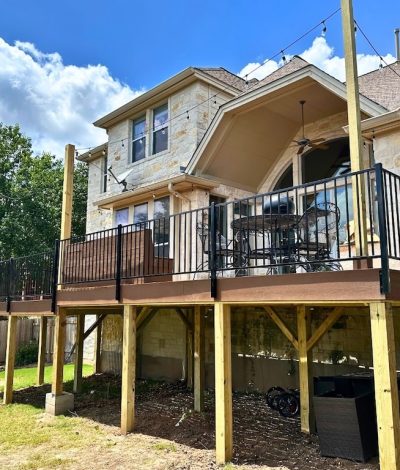
Stone house with a raised wooden deck supported by beams, featuring black metal railings and patio furniture. Sunny day with blue sky and clouds.

Our Honest Take

If low maintenance and recycled content are your priorities, composite is the straightforward answer, and the premium over wood pays itself back in skipped refinishing cycles. If you want wood, cedar with certified sourcing and low-VOC finishes is the cleaner path. And whichever surface you choose, the framing underneath is pressure-treated pine either way, built to a written spec, because structure is where longevity is decided. If you’re weighing a new build against keeping your current deck alive, that decision process is covered in our site-driven design work, and extending a sound deck’s life is often the greenest option on the table.

Factors-That-Drive-Up-Deck-Construction-Costs

Why Homeowners Trust the Recommendation

We’re fully insured, and Texas doesn’t license deck contractors, so we won’t claim a license that doesn’t exist. Every build carries a one-year workmanship warranty, permits run through trusted third-party partners, and the material recommendation comes with the reasoning in writing. We don’t earn more by steering you to one board over another, which is what makes the advice on this page safe to give.

Where We Work

We install composite, cedar, and wood decks across Austin, Round Rock, Cedar Park, Leander, Georgetown, and Pflugerville, plus Lakeway, Bee Cave, and West Lake Hills in the Hill Country. To talk through materials for your project, request a deck estimate online or call (512) 566-7519.

Call Now

(512) 566-7519

Frequently Asked Questions

The recycled content. Major composite boards are manufactured largely from reclaimed plastic film and recovered wood fiber, and the manufacturers publish the percentages, which makes the claim verifiable. Composite also eliminates the staining and sealing cycle, so the deck goes decades without solvent-based finishes. The honest caveat: composite production is energy-intensive, and end-of-life recycling of deck boards is still rare in practice.

It can be, with two conditions. First, the sourcing should carry chain-of-custody certification rather than a vague claim of responsible harvesting. Second, cedar’s real environmental advantage is that it resists rot and insects naturally, so it skips the preservative treatment that pine requires. Pair it with low-VOC finishes and cedar is a defensible choice for homeowners who want wood.

Safe, yes. Modern treatments replaced the old arsenic-based formulas years ago and are approved for residential use, including where kids and pets play. Eco-friendly is a stretch, and any claim that treated lumber is chemical-free is false by definition; the treatment is the point. Its honest environmental case is durability per dollar: treated pine framing is what makes a long-lasting deck affordable, whatever surface goes on top.

For most decks, yes. Water-based, low-VOC products have closed most of the performance gap with solvent-based finishes over the past decade, and the difference in coverage life is now small. The environmental logic is strong because staining recurs: a wood deck gets refinished every two to three years for its entire life, so the finish you choose gets multiplied across decades of applications.

Repair, in most cases where the frame is sound. Keeping an existing structure in service consumes a fraction of the material that replacement does, whatever the new boards would be made of. The decision rests on the frame: if the ledger, joists, and posts are healthy, repair extends the deck’s life affordably and is usually the greener call. An inspection settles which side of that line your deck is on.

Recycled-content composite costs more upfront than treated pine and recovers the difference over time in skipped refinishing: no stain, no sealer, no biennial weekend of maintenance. Certified cedar carries a modest premium over uncertified stock. Low-VOC finishes now price close to conventional products. We quote from a written spec, so you’ll see the material costs itemized rather than folded into a number.

Manufacturer warranties on major composite lines run 25 years and longer against fading and staining, and the boards routinely outlast that. A well-maintained wood deck can match those numbers, but the operative word is maintained: the lifespan depends on the refinishing schedule actually happening. Either way, the deck’s true lifespan is set by the framing underneath, which is why the structure gets specified in writing first.

Yes. Composite is a popular choice in Lakeway, Bee Cave, and West Lake Hills because lake-side sun and humidity punish wood finishes, and the no-refinishing argument gets stronger with the exposure. Cedar also performs well in the Hill Country with the right finish schedule. The material recommendation follows the lot’s sun and moisture conditions, which the site assessment documents before we spec the build.