
A structural check on a hillside deck in Lakeway covers the footings, the tall posts, the diagonal bracing, the beam and ledger connections, the guardrails, and the stairs that follow the slope. Each one gets tested, photographed, and written up in a report.
A deck that sits two feet off the ground and a deck that sits twelve feet off the ground aren’t the same structure, even when the boards on top look identical. Height multiplies everything: the load on each post, the sideways push from people moving around, and what happens if a connection lets go. That’s why the visit runs differently on a slope. It’s a big share of our Lakeway deck repair work, and it’s the part of a deck most homeowners can’t judge from the surface.
Why Height Changes the Inspection
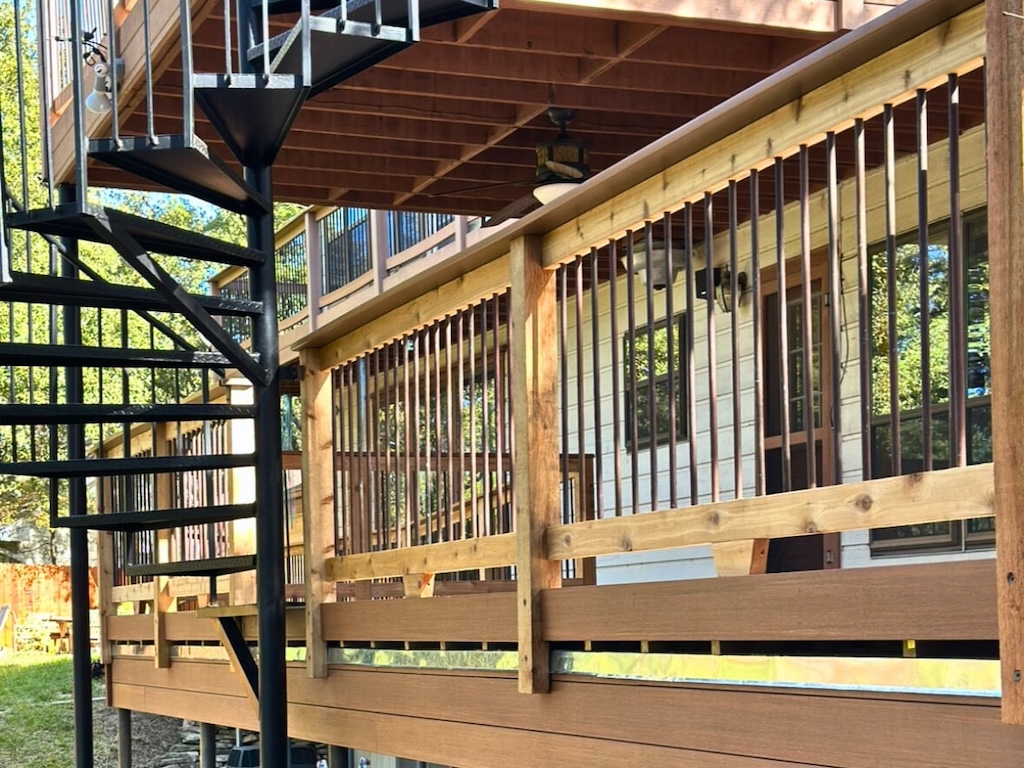
On a low deck, a loose connection shows up as a squeak or a soft spot. On a tall deck, the same loose connection shows up as sway, and sway gets worse quietly. Posts act like long levers. The taller they are, the more a small amount of play at the top or bottom turns into movement you can feel.
So we start underneath and work up. We look at how the deck handles three kinds of load: weight pressing down, people and wind pushing sideways, and the pull away from the house at the ledger. A deck can pass the first and fail the other two, which is why standing on it and bouncing isn’t much of a test. If you’d like a safer way to check for movement yourself, our wobble index for deck movement shows how.
Footings on Limestone
Most Lakeway lots have thin soil over limestone. Rock is a good thing to build on when the footing is tied to it. The trouble comes when a footing was poured in the shallow soil above the rock and years of runoff have carried that soil downhill. Here’s what we look for at each one:
- Exposure. Whether the top or side of a footing is showing where it used to be buried.
- Undermining. Whether there’s a gap under the downhill edge that you could slide a hand into.
- Post base. Whether the post sits in a metal base above the concrete or is buried in it, where rot starts out of sight.
- Lean. Whether the post above is still plumb. A small tilt at the bottom of a tall post becomes inches at the top.
Sizing rules for new footings are in our guide to deck footing depth and sizing. On an existing deck the question is simpler: does each footing still have solid support under all of it?
Posts and Bracing
Tall posts need two things: enough size for their height, and bracing that ties them to the beam and to each other. We check each post for splits, twist, and rot at the base and at any notch where the beam sits. A notch that’s been cut too deep leaves less wood carrying the load than the post’s size suggests.
Bracing is what stops the sway. Diagonal braces between posts and beams, or between posts across the slope, turn a row of tall sticks into a rigid frame. We look for braces that are missing, braces held on with nails where bolts belong, and bolts that have loosened as the wood dried and shrank. Loose brace bolts are a common find on a tall deck, and they’re usually one of the simpler repairs on the list.
Beam and Ledger Connections
The beam carries the joists, and the posts carry the beam. Where they meet, we want to see the beam bearing directly on the post or held in a rated connector with every fastener in place. A beam that’s only bolted to the side of a post depends entirely on those bolts, so they get a close look.
At the house, the ledger board does the same job on the other side. It should be fastened to the home’s framing with structural screws or bolts, not nails, and it needs flashing above it so water can’t sit in the joint. On a tall deck we also look for hardware that ties the deck frame back to the house against sideways movement. The full list is in our ledger and flashing checklist.
Joist hangers and other metal connectors get checked for rust. Corrosion matters more on a deck that’s hard to see under, because nobody notices it until a hanger has thinned out.
Guardrails at Height
A wobbly rail on a low deck is a nuisance. Twelve feet up, it’s the most urgent item in the report. We push on every rail post, check how each one is fastened to the frame, and measure guard height and baluster spacing against current standards. The rules are laid out in our railing and stair code reference. If the guard turns out to be past saving, here’s what to know when a view-deck railing needs replacing.
Stairs That Follow the Slope
Stairs on a hillside deck are usually long, and they land on ground that moves. We check the stringers where they attach to the deck frame, since that connection takes a pulling load every time someone steps down. Then we check the bottom. Is the landing pad still level and fully supported, or has runoff washed out one side?
Uneven riser heights are a trip hazard and a clue. When the bottom step is noticeably taller or shorter than the rest, the landing has usually settled. Long runs should also have a solid handrail the full length, on posts that don’t move.
What the Written Report Includes
The visit takes 60 to 90 minutes on site. Within 48 hours you get a written report with photos of each finding, sorted by urgency: what needs attention before the deck is used, what should be repaired soon, and what’s simply maintenance. You can see the whole process on our page about deck inspection for Austin-area homes.
The report also says what’s in good shape. A hillside deck is rarely all good or all bad. A frame can be sound and still have loose bracing and one undermined footing, and that’s a repair list, not a rebuild.
What Happens After the Inspection
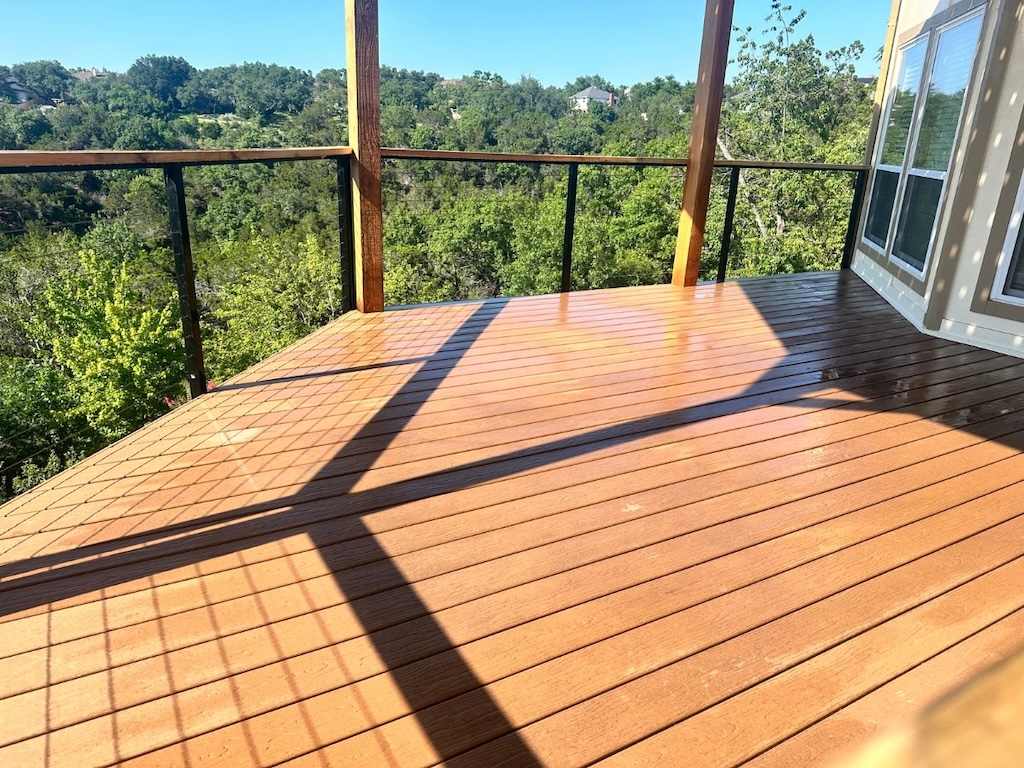
If the frame is sound, the work is usually targeted: new brace bolts, a replaced post, a rebuilt stair landing, or a re-flashed ledger. That’s repair work on the deck frame, scoped from the findings so it matches what’s wrong and nothing more.
When posts, beams, and ledger are all compromised, patching isn’t money well spent. A rebuild lets the new frame be planned for the slope from the start, and on steep lots that often means a deck stepped down the hill in levels in place of one tall platform. We cover that decision on our page about replacing a worn-out deck.
For the bigger picture on what slope, sun, and wind do to decks around the lake, read the full list of what ages a Lakeway deck. And if the deck in question comes with a house you’re about to buy, a deck inspection before closing gets you the same report on a tighter schedule.
We’ve been inspecting, repairing, and replacing decks across Central Texas for more than 12 years, and we schedule inspections the same week you call. To book one, ask for a written estimate or call (512) 566-7519.