
A deck railing needs replacing when its posts move, its wood has rotted at the connections, or it no longer meets guard height and spacing rules. On a Lakeway view deck, replacement is also a chance to open up the view the old rail blocked.
Those two goals can pull against each other, but they don’t have to. The railing is the one part of a raised deck that stands between people and a long drop, so strength comes first. The view comes second, and it helps that the metal rail styles that handle sun and wind well are also the slimmest to look through. This is a regular part of our railing and deck repair in Lakeway, and it starts with checking what the new rail will be bolted to.
Signs a Railing Is Past Repair
Some railing problems are a single loose bolt. Others mean the rail has reached the end. Here’s how to tell them apart.
- Posts that move. Push on each post at the top. If the whole post rocks at the base, the connection to the frame has failed, or the wood around it has.
- Rot at the joints. Wood rails decay first where water sits: the bottoms of balusters, the tops of posts, and where rails meet posts. Soft wood there can’t hold a fastener.
- Splits along the grain. Years of afternoon sun open cracks in top rails and posts. Deep splits around bolts are a strength problem, not a cosmetic one.
- Wide gaps or a low top rail. Older decks were sometimes built with wider baluster spacing or lower guards than current rules allow.
- Patches on patches. Doubled-up posts, extra brackets, and mismatched balusters mean the rail has been failing for a while.
One or two of these in one spot can usually be repaired. When they show up along the whole run, replacing the railing is usually a better use of money than chasing repairs section by section. Our guide to spotting deck damage before it spreads covers the rest of the deck.
The Posts and Frame Come First
A new railing is only as strong as what it’s fastened to. Before any rail style gets chosen, we check the rim joist, the blocking behind it, and the ends of the joists where the old posts were attached. Water follows old bolt holes into the wood, so rot often hides right where the new posts need to go.
If the rim is soft, it gets repaired or replaced first. That’s deck repair ahead of the new railing, and skipping it is how a brand-new rail ends up wobbling. The check is part of a full deck inspection with a written report, which takes 60 to 90 minutes on site.
Height raises the stakes. On a deck built off a slope, the rail posts and the frame under them see more movement than they would near the ground. Our post on structural checks for hillside decks explains what else gets looked at on a tall deck.
Rail Styles That Keep the View
We install four railing types, and each one treats the view differently. Full details are on our deck railing installation page.
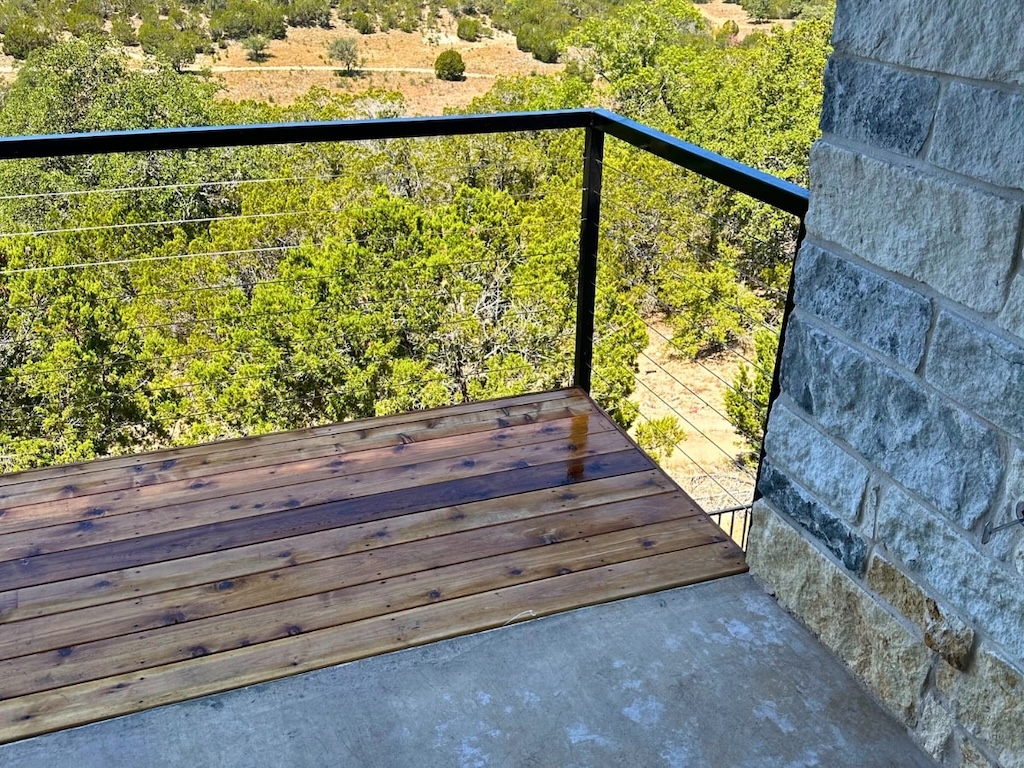
- Cable railing. Thin stainless cables run between posts in place of balusters. From a chair, the cables nearly disappear against the water. Cable needs sturdy end posts because they’re under tension, so the frame check matters even more.
- Aluminum railing. Slim metal balusters block far less than wood pickets, and a dark finish tends to recede when you look past it. Aluminum doesn’t rot and doesn’t need staining.
- Composite railing. It’s bulkier than metal, but it matches composite decking and skips the upkeep of wood. It suits decks where the look of the rail matters as much as the view through it.
- Wood railing. The familiar choice, and the one many older Lakeway decks have. It can be built to open the view somewhat, but it needs sealing to survive western sun.
The top rail matters as much as the infill. A wide, flat cap sits right at eye level when you’re seated. A slimmer top rail, kept within the height rules, interrupts the view less from the chairs you really use, and it’s a detail worth deciding before the posts are set.
Guard Height and Spacing Rules
Railings on raised decks are guards, and building codes set minimums for them. Residential codes generally call for a guard on any deck surface more than 30 inches above the ground, a guard at least 36 inches high, and openings small enough that a 4-inch sphere can’t pass through. Guards also have to resist a set load pushed against the top rail.
Cable rail has its own wrinkle. Cables flex, so they have to be spaced and tensioned so the opening rule still holds when someone pushes on them. Local requirements can differ from the model code, so we confirm the numbers for your address before anything is ordered. Our guide to deck railing and stair code has the details.
Matching Your HOA’s Look
In many Lakeway neighborhoods, a new railing style is something the architectural committee wants to see before it goes up. They’re visible from the street, from the neighbors, and from the water, and design guidelines often name the materials and colors that are allowed.
Send the committee the rail type, the color, and a photo or drawing of the profile. A railing swap may also call for a permit, depending on where you live. We’ve laid out the whole process in HOA review and permits for Lakeway decks.
Sun, Wind, and Upkeep

A view deck usually faces open sky, which means full sun and whatever wind comes off the lake. That exposure is hard on railings. Wood rails on a west-facing deck need regular sealing or staining to keep from splitting. Metal and composite rails skip that cycle, though cable fittings should be checked and retensioned now and then. Whatever you choose, it’s worth a quick push on each post once a year.
Wind is the reason we don’t treat a railing as trim. Every gust pushes on it, and the force lands on the post connections. For more on how exposure ages decks here, see our guide to why Lakeway decks age the way they do.
Next Steps
If the deck boards and frame are in good shape, a railing replacement can stand alone. If the inspection finds the frame is failing too, it makes more sense to plan the railing as part of a complete deck replacement project, so the new posts are built into a new frame.
We schedule inspections the same week you call. You’ll have the written report within 48 hours, and it’ll say plainly whether the rail can be repaired, should be replaced, or is fine as it is. To get started, request a railing estimate or call (512) 566-7519.