
A deck inspection in Austin is often complimentary when it’s part of a repair or replacement proposal. A stand-alone inspection, done for documentation, carries a fee that depends mainly on the deck’s size, its height, and how easy it is to get underneath.
We don’t publish a flat price, and we’d be wary of anyone who quotes one without asking about the deck. Labor and material costs move, and no two decks take the same time to inspect. What we can do is explain what moves the fee, when there isn’t one, and what you should get either way. Here’s how our written deck inspection in Austin works.
Two Kinds of Inspection, Two Kinds of Fee
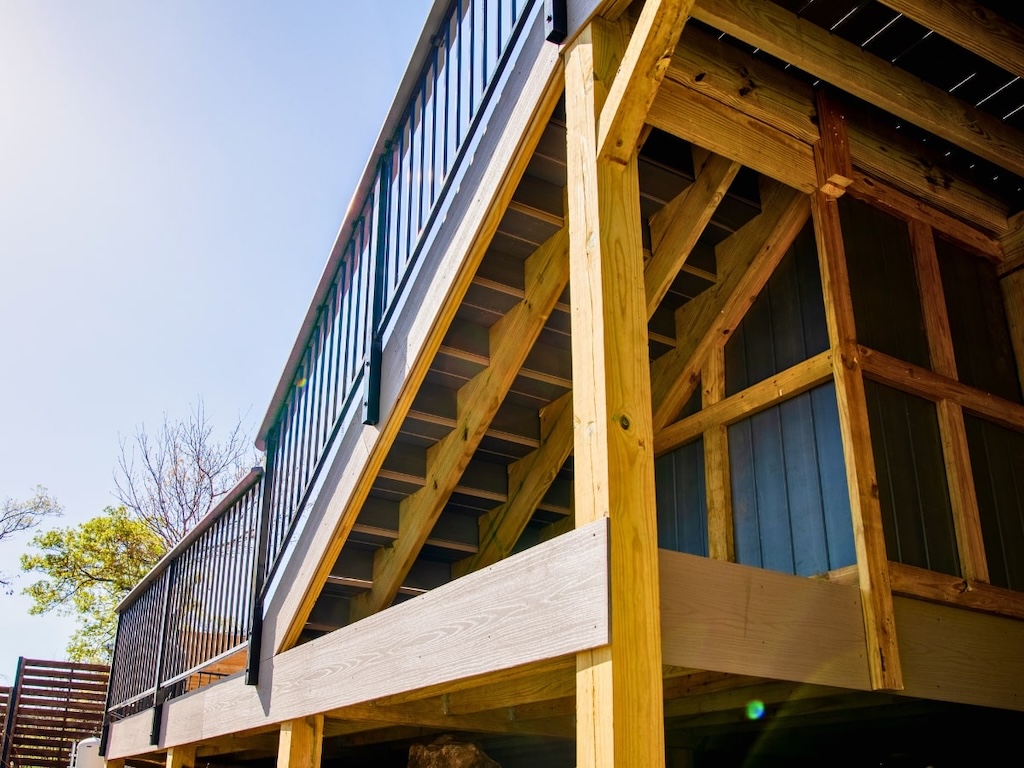
The first question is what the inspection is for.
- Inspection as part of a proposal. You think the deck needs repair or replacement, and you want to know what it’ll take. Here the inspection is the first step of the job. With us, it’s complimentary, and the findings feed straight into your written deck estimate.
- Stand-alone inspection. You need the deck’s condition documented and aren’t planning work right now. Buyers, sellers, and owners planning ahead fall here. This one carries a modest fee, and we credit that fee toward the work if you hire us later.
Either way, we confirm the fee, or confirm that there isn’t one, before the visit is booked.
Why the difference? When an inspection leads to work, the time is part of earning the job, the same way a site visit is for any builder. When it’s for documentation only, the report is the product. You’re paying for someone’s time and judgment, and for a document that has to stand on its own.
What Moves the Fee on a Stand-Alone Inspection
An inspection fee is mostly a measure of time: time on site and time writing the report. These are the things that add to it.
- Size and levels. A larger deck has more footings, more joists, and more railing to check. Extra levels and long stair runs add to the list.
- Height. A deck a foot off the ground and a second-story deck call for different work. Tall posts, bracing, and connections overhead take longer to reach and to photograph.
- Access underneath. Low decks with skirting, or decks with storage packed below, are slower to inspect. If the underside can’t be reached at all, the report says what couldn’t be seen.
- How the deck is built. A deck attached to the house has a ledger and flashing to check. Rooftop decks and balconies over living space add drainage and waterproofing to the list.
- Location. Distance matters with any contractor. Our core service area is Austin and the Central Texas cities around it.
Austin adds its own factors. West of MoPac, many decks are built off slopes on thin soil over limestone, which means tall posts and footings that need a close look. East of it, expansive clay moves through wet and dry spells, so posts and footings get checked for heave and lean. Either way, the underside takes longer than the surface.
None of this is unique to us. It’s how inspection time adds up for any builder, and it’s worth asking any company you call which of these apply to your deck.
What a Paid Inspection Should Include
A fee is fair when you get something you can use. Whether it’s ours or someone else’s, look for these:
- A visit long enough to get under the deck. Ours runs 60 to 90 minutes on site.
- Photos of every finding, not a summary paragraph.
- Findings sorted by urgency: safety items, repairs to plan, and maintenance.
- A written report you keep. We send ours within 48 hours of the visit.
- A clear statement of anything that couldn’t be inspected, and why.
If you’d like to know what the document looks like, our post on how to read a deck inspection report walks through it section by section.
Notice what’s not on that list: a sales pitch. A report that reads like an advertisement for a new deck isn’t doing its job. A useful one tells you what’s in good shape too, even when that means there’s less work to sell.
Why a Free Look Isn’t Always the Same Thing
Plenty of builders offer a free visit. Often that visit is a sales estimate: someone measures, looks at the surface, and sends a price. That’s fine for a simple new build. It isn’t an inspection, and it won’t tell you whether the frame under an older deck is sound.
The difference is what you’re handed afterward. An estimate gives you a number. An inspection gives you findings, and the number follows from them. We compare the two in more detail in free versus paid deck estimates.
What an Inspection Saves

It’s fair to ask whether paying for an inspection is worth it. Think about what it prevents. A repair quote written without one has to guess at what’s under the boards, and guesses get padded or get revised mid-job. A quote for replacing a deck written without one may replace a frame that had years left in it.
With findings in hand, the scope is tied to the deck’s real condition. Sometimes that means a smaller job than you feared. Our article on weighing repair against replacement shows where that line tends to fall, and what goes into a deck estimate explains how findings become a price.
There’s also the cost of not knowing. A loose guard or a ledger that’s letting water in doesn’t announce itself, and both get more expensive the longer they’re left. A check every few years on an older deck is a small expense next to the repair it helps you avoid.
Who Usually Books a Stand-Alone Inspection
- Buyers. A deck check during the option period, before the contract is final. Who should do it is covered in home inspector or deck contractor.
- Sellers. A report before listing, so there are no surprises later. See inspecting the deck before you list.
- Owners of older decks. A baseline on a deck that’s 10 or 15 years old, before problems show.
- Owners after a storm. Documentation for your own records. Storm calls go to the front of our schedule.
Between professional visits, a yearly deck safety walkthrough that you do yourself catches a lot.
Getting the Most From the Visit
A few things you control make the visit go further.
- Clear stored items from under and around the deck.
- Unlock the gates, and let us know about pets.
- Tell us the deck’s age and any past repairs, if you know them.
- Send a few photos when you call, including one from underneath.
If you already expect to need work, say so. In that case the inspection is part of the proposal, and there’s no separate fee.
Booking an Inspection
We schedule inspections the same week you call. Tell us what the inspection is for, and we’ll tell you up front whether there’s a fee. To set one up, call (512) 566-7519. If repairs follow, they’re handled as deck repair scoped from the report.